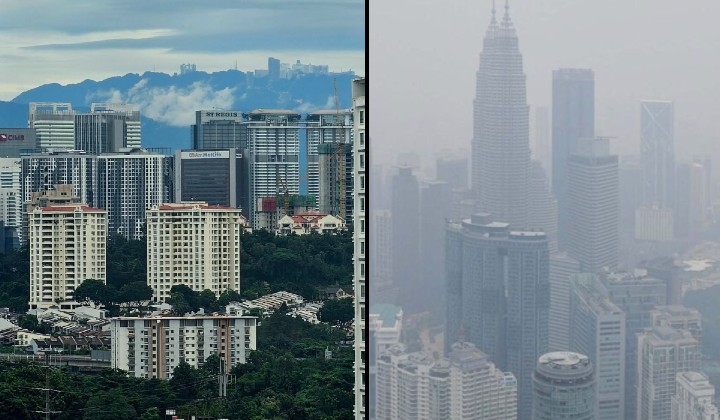
“Never Happier To See Genting”: Malaysians Rejoice As Three-Month Haze Yields To Changing Wind
Subscribe to our FREE Newsletter, or Telegram and WhatsApp channels for the latest stories and updates.
A shift in seasonal wind patterns has cleared the dense smog that covered the Klang Valley for nearly three months, restoring visibility of the landmark Genting Highlands ridge from more than 30 kilometres away.
Data from the Department of Environment (DOE) indicated that the Air Pollutant Index (API) in Kuala Lumpur and Petaling Jaya dropped to the “good to moderate” range of approximately 50.
This followed a prolonged period in October where readings regularly exceeded 150.
Meteorological Department Director-General Mohd Hisham Mohd Anip stated that the agency does not anticipate further haze episodes for the remainder of 2026.
The department attributed the atmospheric clearance to the onset of the Northeast Monsoon, which altered the prevailing wind direction and brought increased rainfall to source areas of peatland fires.
While regional atmospheric models suggest the clear conditions may persist into mid-2027, long-term forecasts indicate a potential return of dry conditions later next year due to an intensifying El Niño cycle.
Social media platforms registered a surge of user-generated content, with the public sharing photographs of the Genting Highlands skyline situated above the Batang Kali foothills along the Titiwangsa Range.
The images, captured from various vantage points across Kuala Lumpur and Selangor, documented a sharp contrast to the low-visibility conditions of the preceding weeks.
At the height of the haze crisis, local mega-structures including the Petronas Twin Towers and Merdeka 118 were completely obscured from vantage points just a few kilometers away.
Surface visibility routinely fell below a few hundred meters across major transit corridors, disrupting aviation operations and necessitating ground transportation delays.
Furthermore, the atmosphere maintained a persistent burning odor, with sunlight heavily diffused into a uniform grey palette due to high concentrations of suspended transboundary PM2.5 matter.
Alongside these visibility constraints, public healthcare networks recorded a sharp increase in admissions for pollution-related sickness.
The Ministry of Health confirmed a substantial spike in medical consultations for upper respiratory tract infections, conjunctivitis, and acute asthma exacerbations as the prolonged smog took a physical toll on local populations.
READ MORE: Indonesia Haze: 1,104 Hotspots, Estimated 1,700 Deaths And Foreign Aid Rejected
Share your thoughts with us via TRP’s Facebook, X, Instagram, or Threads.
……Read full article on The Rakyat Post - News
Other

One-stop lifestyle app dedicated to making life in Singapore a breeze!




 English
 简体中文
Comments
Leave a comment in Nestia App