BP sale elevates Klesch in Germany
MUNICH: Over the past three decades, American investor A Gary Klesch has amassed a portfolio of struggling steel mills, aluminium smelters, chemical plants and oil refineries, betting he could squeeze value from businesses their previous owners no longer wanted.
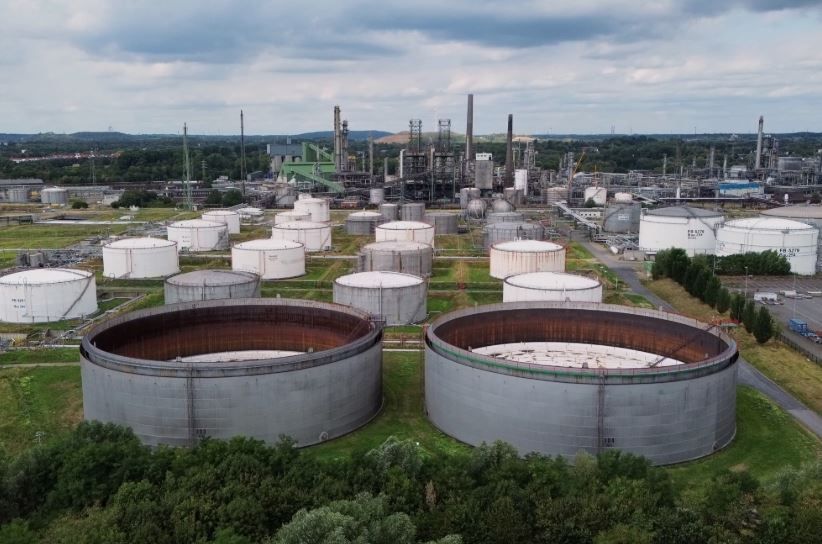
Now, with the takeover of BP Plc’s Gelsenkirchen refinery, Klesch Group Ltd has become Germany’s second-largest oil refiner and the biggest shareholder in one of the country’s most important crude oil pipeline networks.
Together with Germany’s 10 other refineries, it produces fuel for trucks, aircraft and ships and underpins much of the country’s chemical industry.
At a moment when supply chains are under stress from wars in Ukraine and the Middle East, the sale to the privately held Malta-based company has raised concern about energy security in Europe.
The move is also the latest sign of a broader shift in Europe’s refining industry.
In recent years, the oil majors that rose during the continent’s post-war industrial expansion have reassessed their refining portfolios as ageing plants become increasingly expensive to maintain and tougher environmental regulations drive up the costs of keeping them compliant.
Unexpected events can add to the burden. At Gelsenkirchen, for instance, a fire last month forced some of the plant’s units, including one that’s key to making diesel, to temporarily shut down.
Holding onto refineries no longer makes financial sense for many oil majors, said Tibor Fedke, a partner at the Noerr law firm who has advised on several such deals.
Companies such as BP, Shell Plc and Exxon Mobil Corp have all weighed shedding assets or scaling back operations at some of their European facilities.
BP said in a statement last Monday that it expects to save as much as US$1bil a year in operating costs by selling the facility and did not comment further in response to questions from Bloomberg.
Fedke noted that such sales have the extra benefit of “eliminating the largest carbon dioxide footprint from a company’s balance sheet”.
While those long-term pressures have made many sites less attractive to large integrated energy companies, the disruption to global fuel markets following Russia’s invasion of Ukraine has boosted refining margins. That has presented an opportunity to privately owned commodity traders and investment firms willing to bet they can generate returns.
But should margins weaken again, refineries’ high operating and investment costs could become difficult to justify.
Klesch entered the refining business in 2010, and its two existing refineries in Heide, Germany, and Kalundborg, Denmark, together process less crude than Gelsenkirchen’s roughly 265,000 barrels per day.
The company has previously clashed with regulators, suing the German government in 2023 over a temporary windfall tax on energy companies introduced after Russia’s invasion of Ukraine.
It also shelved plans for a green hydrogen plant at the Heide site.
Klesch declined to comment to Bloomberg News.
According to Fedke, the new generation of refinery buyers are typically speciality funds or family-owned companies that are less reliant on “Western capital markets or green reporting”.
Privately held companies are not beholden to shareholders and are allowed to release less financial information less frequently than their publicly listed counterparts. That can have environmental implications – in 2020, a privately owned company was found to have the highest emissions intensity among the top fossil fuel producers in the United States – as well as geopolitical ones.
The “reduced transparency into financing, leverage and long-term investment capacity” could facilitate supply chain vulnerabilities if problems aren’t identified before they escalate, explained Sabrina Schulz, an energy expert at the German Council on Foreign Relations.
To ensure Gelsenkirchen remains a reliable source of fuel, the government in Berlin scrutinised Klesch and attached strings to the deal.
Under the terms of the sale, the company had to guarantee that the refinery would continue to take measures to safeguard energy security and ensure long-term supply to customers that operate critical infrastructure, a spokesperson for the Economy Ministry said.
The government also maintains the right to monitor Klesch’s operations and revoke its ability to operate in the event of violations.
After months of uncertainty, the sale comes as a relief to the plant workers, politicians and companies in the region that depend on the refinery.
“It’s difficult to find buyers who, from the federal government’s perspective, will ultimately be able to operate this critical infrastructure in a way that maintains the security of supply in the long term,” said Christian Kuchen, head of Germany’s Fuels and Energy Association, adding that attempted refinery sales have failed in the past.
While the Klesch Group may be looking to follow the cost-cutting playbook it deployed at Heide and Kalundborg, cutting about 14% of staff over a decade, Kuchen notes that there have been discussions to close Gelsenkirchen entirely.
Had that happened, he said, “an entire chemical industry region would have collapsed”, taking hundreds of companies and tens of thousands of jobs with it.
In Heide, the head of the works council at Klesch’s refinery said the facility has exceeded expectations since coming under the company’s ownership.
“The Heide refinery is still in operation today, more than 15 years after joining the Klesch Group,” Kai Bergmann said.
“That was not something anyone could have anticipated back then.
“And in the bigger picture, it’s a good moment to be in refining.”
Despite volatility, Europe’s refiners have enjoyed unusually profitable periods since the invasion of Ukraine disrupted fuel markets and reduced Russian exports.
More recently, refiners’ bottom lines have also been bolstered by the conflict in the Middle East and attacks on Russian refineries, which have tightened supplies of diesel and jet fuel.
Even with electric car sales and rising carbon costs eating into profits, said Ajay Amin, an energy deals partner at PwC who most recently advised Klesch on the acquisition, “the strategic importance of Europe’s refining sector has arguably increased”. —Bloomberg
……Read full article on The Star Online - Business
Entertainment Malaysia

One-stop lifestyle app dedicated to making life in Singapore a breeze!




 English
 简体中文
简体中文
Comments
Leave a comment in Nestia App