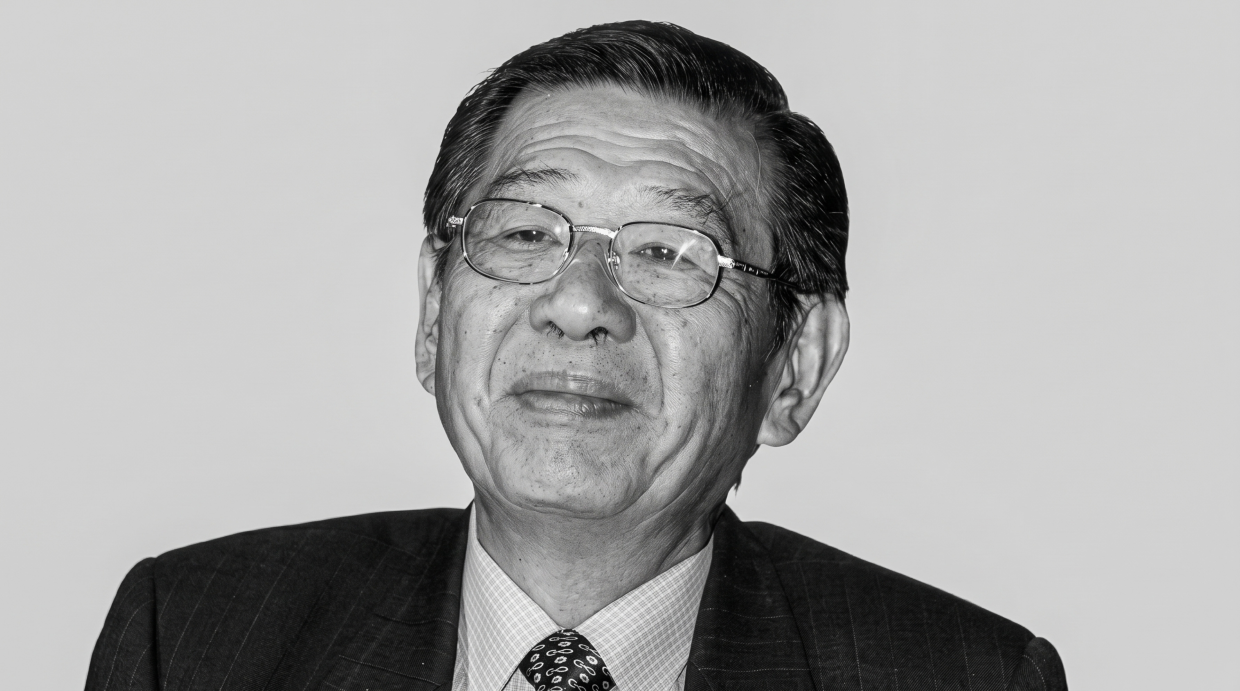
Beyond the hydrogen bomb: Leadership lessons from Tun Lim
SOME leaders leave behind policies, some institutions, some stories.
The late Tun Dr Lim Keng Yaik left all three. And somewhere in that legacy, he also left us a “hydrogen bomb”.
Not a real one, fortunately. His weapon belonged to the chemistry of edible oils and that irreverent vocabulary with which Tun Lim could turn complicated science into something an entire conference hall remembered.
I had written about him before as one of palm oil’s great champions. Returning to his story now, older and retired, I see him differently.
The jokes remain funny. The “hydrogen bomb” remains unforgettable.
My 2003 encounter with him remains precious. But age rearranges memories. We begin to see not merely what happened, but what it meant. Behind the humour, bluntness, science and theatre was a way of leading.
Tun Lim never handed me a Keng Yaik Leadership Code. These are 10 lessons distilled from watching him, listening to him and spending more than three decades in an industry he helped shape.
He served as Primary Industries Minister from 1986 to 2004, an extraordinary 18 years spanning a formative period for Malaysia’s commodities.
His son Lim Si Pin remembers the intensity behind those early years. Taking over the ministry when the nation was just 29 years old, Tun Lim brought files home and read late into the night, studying the bottlenecks, policies and potential of palm oil.
He even brought fresh and empty fruit bunches home to examine firsthand.
“He poured his heart and soul into understanding the rough diamond before him,” Si Pin recalled.
“His dedication was unwavering.”
That private preparation helps explain the public Tun Lim I later encountered. Behind the jokes and colourful language was a man who had done his homework.
Face reality, then look beyond it
The first lesson is simple: face reality, not comfort. Tun Lim demonstrated this during the “War of Oils”.
In the late 1980s, the American Soybean Association mounted an aggressive campaign against tropical oils in the United States, with palm oil portrayed as a nutritional villain.
Malaysia could have dismissed it as somebody else’s campaign in somebody else’s market. Tun Lim saw the larger danger.
A narrative born in one country could travel, and an allegation repeated often enough could become accepted wisdom. So he confronted it.
That remains relevant today. Palm oil faces scrutiny over sustainability, biodiversity, deforestation, labour, traceability and climate change.
Some criticisms may be exaggerated or commercially motivated. Others deserve serious attention.
Mature leadership requires knowing the difference. Defending an industry does not mean pretending it has no weaknesses. Sometimes the greatest service we can render something we care about is to tell it an uncomfortable truth.
The second lesson is think beyond the next harvest. Tun Lim’s Vision 25:35 challenged the industry towards an oil extraction rate of 25% and fresh fruit bunch yields of 35 tonnes per hectare.
We did not achieve those aspirations, but perhaps the larger question mattered more: how much more value could Malaysia create from every hectare it already possessed?
That question is even more pertinent today. Land is finite. Palms age. Labour remains difficult. Genetics, agronomy, mechanisation, harvesting efficiency, digitalisation and robotics must increasingly provide productivity gains.
Perhaps 25:35 was never merely about 25 and 35. It was about refusing to believe that today’s ceiling must remain tomorrow’s ceiling. A planter harvests today. A leader also plants for people he may never meet.
The third lesson is that talent is national capital. The War of Oils was never a one man show. Malaysia needed science, industry and government.
Tan Sri Dr Augustine Ong and the scientific community brought research and evidence. Industry leaders, including the late Tan Sri Borge Bek Nielsen, brought commitment and resources. Tun Lim brought political leadership and the ability to carry the argument into the public arena.
I came to describe that combination as the three Bs: brains, brawn and budget.
Brains without resources can remain trapped in laboratories. Budget without knowledge can produce expensive noise. Brawn without evidence becomes bluster.
You do not have to be the cleverest person in every room. You need to know whom to bring into it. Strong leaders become stronger by surrounding themselves with people who know more than they do.
The fourth lesson is know your subject before defending it. Tun Lim could be colourful because there was substance beneath the colour.
A medical doctor by training, he immersed himself in commodities and surrounded himself with scientists and practitioners who understood the details.
And then came his most memorable weapon, the “hydrogen bomb”.
The science involved hydrogenation. Liquid vegetable oils were commonly partially hydrogenated for certain functional properties, a process that could generate trans fatty acids.
Palm oil’s natural composition allowed it to serve many food applications without such partial hydrogenation.
Try explaining that to an audience after lunch. Tun Lim had another approach: “If the ASA doesn’t back down, I’ll drop the ‘hydrogen bomb’ on them!”
At an international palm oil conference, he could invoke his Belfast medical training, the Irish Republican Army and his hydrogen bomb within the same performance. People laughed. More importantly, people remembered.
The joke worked because there was science behind it. Passion without knowledge is noise. Knowledge without communication seldom leaves the room.
That leads to lesson five: speak so people remember. Those who heard Tun Lim will remember the expressions, pauses, mischievous grin and occasionally the considerable quantity of saliva accompanying the performance.
“Don’t mind my spit when I talk about palm oil. I’m just so passionate about it!” Those in the front row discovered that ministerial enthusiasm had a splash radius.
Then there was his encouragement to breeders to produce larger fruitlets. How large?
Botanical terminology apparently lacked sufficient descriptive power, so Tun Lim invoked Dolly Parton, complete with the necessary hand gestures.
Today, several communications departments might need counselling. But nobody forgot the message: bigger fruitlets, better productivity, push the biological frontier.
Tun Lim understood that if you know something deeply enough, you should be able to make it understandable. Facts need evidence, but if we want facts to travel, sometimes they also need a story.
The “hydrogen bomb” contained the sixth lesson: turn adversity into advantage.
Tun Lim did not merely ask how Malaysia should defend itself against the soybean campaign. He looked for weaknesses in the argument coming towards us. An attack forced the industry to understand its strengths more clearly.
The principle applies today. Palm oil has faced enormous pressure over sustainability, but pressure can also accelerate improvement.
Traceability, certification, better labour practices, methane capture, smallholder inclusion and mechanisation can strengthen competitiveness.
Sometimes adversity tells us where we need to become better. The stone thrown at you can become part of the road you build.
When the leader leaves the room
The seventh lesson was characteristic Keng Yaik: set the bar high and demand performance.
“If you can’t compete in this business, then get out of this business.” Not exactly the vocabulary of today’s motivational leadership seminar.
His style belonged to another era. Leadership and workplaces evolve, but standards still matter.
Encourage people, develop them, mentor them and listen to them. Eventually, someone must still ask: did we deliver?
The eighth lesson has grown more important to me with age: build institutions that outlast personalities.
Tun Lim was such a large personality that it is easy to remember the man and overlook the architecture built during his stewardship. The Malaysian Palm Oil Board was established in 2000.
A speech ends. The laughter subsides. A minister leaves office. The institution keeps working. Perhaps one of the finest measures of leadership is not how much happens while you are in the room, but how much continues after you have left it.
Lesson nine is engage even those who disagree with you.
I remember the story involving M.R. Chandran and the industry’s engagement with non-governmental organisations (NGOs) during the formative days of what became the Roundtable on Sustainable Palm Oil (RSPO).
Tun Lim teased Chandran about venturing to “sleep with the NGOs”. Chandran replied that they might share the same bed but would be chasing different dreams. Tun Lim’s response was vintage Keng Yaik: “Remember, it’s your neck!”
Beneath the humour lies a serious lesson. Engagement is not surrender. Sometimes we need to sit across the table from people with whom we profoundly disagree because staying outside allows others to shape the conversation without us.
Palm oil cannot speak only to palm oil. Syok sendiri! Listen, engage, argue your case, find common ground where possible and hold your ground where necessary. But remain at the table.
My tenth lesson is different. It is not found in a ministry, policy or institution. It happened across a table.
In May 2003, I was given the opportunity to present A Century of Oil Palms in Malaysia at an Malaysian Palm Oil Association gathering. I was younger then. More hair, less waistline and probably considerably more confidence than wisdom.
The room was full, but I kept watching one man. Tun Lim sat there, cigarette in hand, listening.
Imagine presenting the history of Malaysian palm oil to the minister who had spent much of the previous 17 years helping to make that history. Aiyoh. No pressure, lah.
Among the ideas I floated was engaging Michelle Yeoh as an ambassador for Malaysian palm oil. Celebrities were increasingly being used in European environmental campaigns.
Why should Malaysia not have an internationally recognised Malaysian helping to tell our story?
Afterwards, I approached Tun Lim’s table. He shook my hand and offered words of encouragement that I still remember. Then came the twinkle.
He liked the Michelle Yeoh idea. “She’s my niece, you know.” Of course. I walked away smiling. Twenty three years later, however, the joke is not what matters most. He had listened.
Here was one of Malaysia’s longest serving commodity ministers listening to a younger industry person, engaging with an idea and making him feel that what he was trying to contribute mattered.
As I grow older, I understand that encounter differently. Leadership is not measured only in institutions, negotiations, policies or battles won.
Sometimes it is measured by what we unknowingly awaken in another person: a word, a handshake, an idea taken seriously, a younger person made to believe he has something worthwhile to contribute.
What leadership leaves behind
My journey took me through research, plantations, management and advocacy and, eventually, into this unexpected second harvest of writing.
Looking back, I realise people leave fingerprints on our lives without knowing it. Tun Lim left one on mine.
These are not “Tun Lim’s Ten Commandments of Leadership”. They are what one industry person learnt from watching him: face reality, think beyond the next harvest, treat talent as national capital, know your subject, communicate memorably, turn adversity into advantage, demand performance, build institutions that outlive you, engage those who disagree with you and never underestimate what you may ignite in another person.
His humour had knowledge behind it, his aggression had strategy and his advocacy had science.
His personality mattered because capable people and institutions stood behind it. Brains, brawn and budget.
Add courage, timing and a wicked sense of humour. Perhaps that was the Keng Yaik formula.
Malaysia’s commodity industries today inhabit a different world. Issues, expectations and language have changed. We should not try to manufacture another Keng Yaik. There could only be one.
But we can inherit his curiosity, preparation, audacity, respect for expertise, insistence on performance and ability to translate complexity when something worth defending needs a voice.
Twenty three years have passed since that handshake. The cigarette smoke has cleared. The minister has long left us. Yet when I write about the industry that has occupied so much of my life, I still remember the man at that table and those few words we shared.
I remembered. Perhaps that is the tenth lesson after all. We seldom know which word, gesture or moment will survive us in somebody else’s memory.
Tun Lim’s “hydrogen bomb” made headlines. His jokes filled conference halls with laughter. His policies and institutions helped shape an industry.
But perhaps a leader’s most human legacy resides in those encouraged to carry on after he has left the room. I happened to be one of them.
Rest well, Tun. The bomb was memorable. The lessons were bigger.
Joseph Tek Choon Yee has over 30 years of experience in the plantation industry, with a strong background in oil palm research and development, C-suite leadership and industry advocacy. The views expressed here are the writer’s own.
……Read full article on The Star Online - Business
Entertainment Malaysia

One-stop lifestyle app dedicated to making life in Singapore a breeze!




 English
 简体中文
简体中文
Comments
Leave a comment in Nestia App