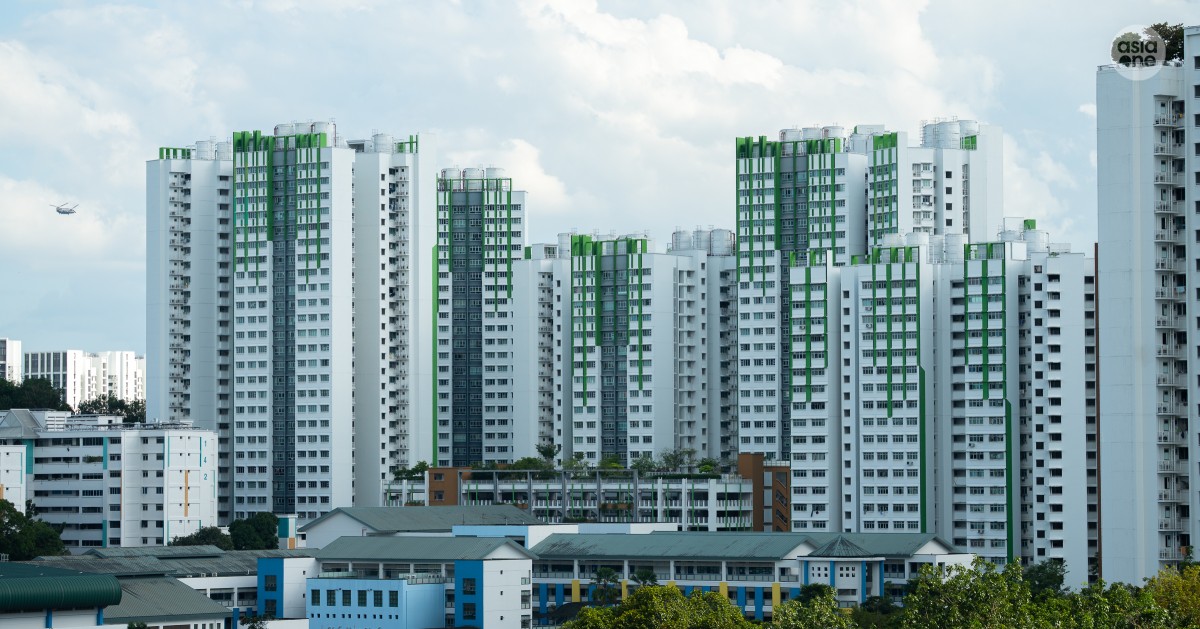
Condo and HDB rental market rebounds in June as leasing activity picks up after May lull
Singapore's rental market showed signs of recovery in June 2026 after a quieter May, with both condo and HDB rents inching higher while leasing activity picked up across the board.
According to the 99-SRX Rental Flash Report, the condo rental market saw a broad-based recovery in transaction volumes, while rental prices continued to edge upwards despite softer performance in the Core Central Region (CCR).
Meanwhile, the HDB rental market also posted modest rental growth, supported by higher demand across most flat types.
Overall condo rental prices increased 0.3 per cent month-on-month in June, partially reversing the 0.6 per cent decline recorded in May and bringing the market back onto a modest growth trajectory after rents reached an all-time high in April.
The latest increase lifted the condo rental index to 145.0, up from 144.5 in May.
Although rents continued to rise, the pace remained relatively restrained. On an annual basis, condo rents were 2.4 per cent higher than in June 2025, indicating that the market continues to appreciate, albeit at a considerably slower rate than during the rental boom in previous years.
Luqman Hakim, Chief Data & Analytics Officer at 99 Group, said the latest figures point more towards stabilisation than the start of another sharp upswing.
It indicates that landlords continue to benefit from healthy tenant demand, but the pace of rental growth has become much more sustainable as supply gradually catches up with demand.
A closer look at regional performance shows that the Rest of Central Region (RCR) recorded the strongest monthly increase, with rents rising 0.9 per cent, followed closely by the Outside Central Region (OCR) at 0.8 per cent. In contrast, rents in the Core Central Region (CCR) declined 1.0 per cent over the month.
The divergence reflects a market where tenant demand continues to favour value-for-money locations outside the traditional prime districts. City-fringe neighbourhoods and suburban estates remain attractive to both local households and expatriates, offering newer developments, good transport connectivity and comparatively lower rental costs than homes in the CCR.
Despite the monthly pullback in the CCR, all three regions remained firmly above last year's levels.
Compared with June 2025:
CCR rents increased 2.5 per cent;
RCR rents increased 2.5 per cent;
OCR rents increased 2.0 per cent.
The annual figures suggest that while rental growth has moderated, the underlying market remains healthy across Singapore, with every region continuing to record positive year-on-year gains.
While rental prices recorded only modest gains, the more significant story in June was the recovery in leasing activity.
An estimated 6,973 condo units were rented during the month, representing a 19 per cent increase from the 5,858 units leased in May.
The improvement also pushed transaction volumes 4.3 per cent above June 2025 and 10.1 per cent higher than the five-year average for the month, indicating that tenant demand remains robust despite the more measured pace of rental growth.
The rebound comes after a quieter May and suggests that leasing demand has returned. According to Luqman Hakim, the surge in transactions also reflects the market's growing ability to absorb additional housing supply.
"The private rental market is absorbing a larger pool of available homes, including newly completed units entering the leasing market," he noted.
This is an important distinction. In previous years, stronger demand often translated directly into higher rents because of limited housing availability. June's figures instead point to a more balanced market, where increased leasing demand is being met by a larger stock of available homes.
The distribution of leasing activity further illustrates where tenant demand is concentrated.
The Outside Central Region (OCR) accounted for 38.0 per cent of all condo rental transactions in June, making it the busiest rental market. The Rest of Central Region (RCR) followed with 32.8 per cent, while the Core Central Region (CCR) represented 29.2 per cent of leasing activity.
The figures reinforce the growing importance of suburban neighbourhoods in Singapore's rental market.
Besides generally lower rents, many OCR developments have been completed within the past few years, providing tenants with modern facilities, improved connectivity and a wider selection of available units.
The HDB rental market also strengthened in June, although the pace of growth remained more measured than in the private residential sector.
Overall HDB rental prices rose 0.6 per cent month-on-month, lifting the HDB rental index to 145.1 in June. The increase marks another month of steady appreciation, although a slight downward trend was recorded briefly in May.
Breaking the figures down geographically, mature estates continued to outperform, with rents increasing 0.7 per cent, compared with 0.4 per cent in non-mature estates. The trend is unsurprising given that mature towns typically offer stronger transport connectivity, more established amenities and closer proximity to major employment nodes.
Estates such as Bishan and Bukit Merah, with their premiums, continue to attract both local and expatriate tenants seeking shorter commutes and comprehensive neighbourhood facilities, allowing landlords in these locations to command relatively stronger rental growth.
On a year-on-year basis, overall HDB rents were 1.4 per cent higher than in June 2025. Rental prices in mature estates rose 1.8 per cent, while non-mature estates recorded a more modest 0.9 per cent increase.
Rental performance also varied across HDB flat types.
Executive flats recorded the strongest monthly increase, with rents rising 1.2 per cent in June. They were followed by three-room flats (+0.7 per cent) and five-room flats (+0.6 per cent), while four-room flat rents dipped marginally by 0.1 per cent over the month.
The stronger performance of Executive flats is likely supported by their limited supply. Unlike standard HDB flat types, Executive flats have not been built for decades, making them a relatively scarce housing option. Their larger floor areas also continue to appeal to bigger families and tenants seeking more living space.
The slight decline in four-room rents, meanwhile, is unlikely to indicate weakening demand for the segment. Given that four-room flats typically make up one of the largest proportions of rental transactions, monthly fluctuations are not uncommon and often reflect changes in the mix of units leased rather than a structural shift in demand.
Looking at annual performance, every HDB flat type maintained an upward trend. The figures indicate that rental growth remains broad-based across Singapore's public housing market.
Compared with June 2025:
Three-room flat rents increased 1.6 per cent;
Four-room flats rose 1.1 per cent;
Five-room flats climbed 1.5 per cent;
Executive flats increased 0.6 per cent.
Despite the varying rental performance across flat types, four-room flats continued to dominate leasing activity in June.
They accounted for 38.8 per cent of all HDB rental transactions, followed by:
Three-room flats: 31.8 per cent
Five-room flats: 23.7 per cent
Executive flats: 5.7 per cent
The popularity of four-room flats reflects their position as the "middle ground" of Singapore's public housing market.
They offer sufficient living space for families while remaining more affordable than larger five-room or Executive flats, making them attractive to a broad range of tenants.
Three-room flats also continued to account for nearly one-third of rental demand, underlining their importance among singles, couples and smaller households seeking more affordable accommodation.
Meanwhile, Executive flats remained a niche segment due to their limited supply, even though they recorded the strongest month-on-month rental growth.
The overall leasing activity in the HDB market also picked up in June, although the rebound was more modest than that seen in the private residential sector.
An estimated 2,725 HDB flats were rented during the month, representing a 4.8 per cent increase from the 2,601 units recorded in May.
Rental volumes were virtually unchanged from a year ago, rising just 0.1 per cent compared with June 2025. More notably, June's leasing activity remained 4.1 per cent below the five-year average for the month.
Taken together, June's figures point towards a rental market that continues to normalise after several years of exceptional growth.
The most notable development was not the modest increase in rents, but the recovery in leasing activity - particularly in the condo market. The fact that transaction volumes rose faster than rental prices suggests that additional housing supply is being absorbed without creating renewed upward pressure on rents.
Luqman Hakim believes the latest figures reflect a market that is becoming more balanced as supply improves. "The rise in supply may also help explain why rental activity strengthened without leading to a similarly strong increase in prices."
He added that the overall market remains healthy despite the moderation in rental growth. "Overall, June's figures appear consistent with a rental market that is gradually finding its balance. Demand remains healthy, but the increase in available housing is helping to keep price growth restrained."
Looking ahead, barring any unexpected surge in housing demand or tightening in available supply, Singapore's rental market appears poised to remain on a stable footing through the second half of 2026.
Landlords are likely to continue benefiting from healthy occupancy levels, while tenants should find a market offering more choice and greater pricing stability.
[[nid:739883]]
……Other

One-stop lifestyle app dedicated to making life in Singapore a breeze!




 English
 简体中文
简体中文
Comments
Leave a comment in Nestia App