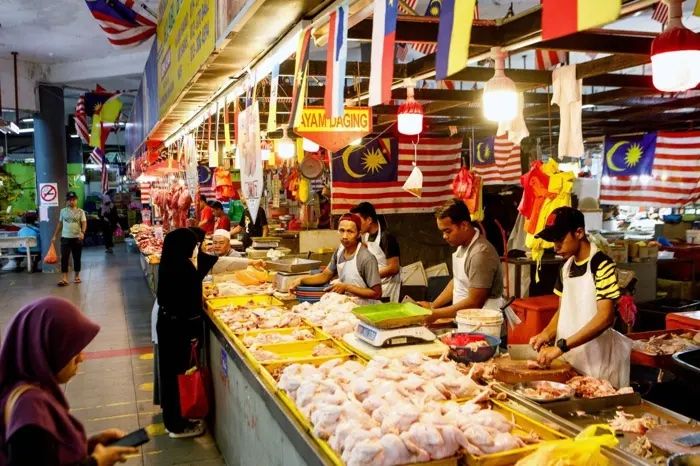
Easing the rising cost of living and households’ wellbeing
AS a small and open economy, Malaysia is exposed to heightened global uncertainties, including volatility in global energy prices, which could raise import and production costs, exert upward pressure on consumer prices and weigh on business activities and household spending.
Nonetheless, Malaysia’s position as a net energy exporter provides buffers against the impact in the domestic market, while government measures are expected to continue cushioning households from higher living costs, particularly during periods of elevated external cost pressures.
Higher global crude oil prices would increase domestic production costs through rising energy and intermediate input costs.
These increased costs are subsequently reflected in the Producer Price Index (PPI) before being transmitted to the Consumer Price Index (CPI), particularly for food items and transport-related services that rely on energy and imported inputs.
Given the role of Brent as the global crude oil benchmark, an empirical analysis found that an increase of US$20 in the Brent crude oil price would cause both PPI and CPI to increase by 0.74 percentage points (ppt) and 0.14 ppt, respectively, in the short run. The effect of pass-through to CPI is only about one-fifth of that to PPI, suggesting that the transmission of higher production costs to consumer prices is contained.
Further analysis indicates that the pass-through effect from producer prices to consumer prices experiences a sharp increase within the first four months before rising gradually, reaching around 40% in the long run.
The government has adopted a broad and complementary set of measures to cushion the impact of rising living costs and safeguard household wellbeing, particularly during periods of heightened external cost pressures.
These measures operate through two main channels: price stabilisation measures, which help moderate increases in the price of essential goods and services; and targeted assistance, which provides direct financial support to improve the remaining income of eligible households and vulnerable groups.
Price stabilisation measures, particularly capping the prices of RON95 and diesel, help moderate the transmission of higher global energy prices to the costs of domestic essential items. This is particularly important for lower-income households, which have smaller income buffers and less capacity to absorb increases in essential expenditure. The measures have helped contain household expenditure pressures at the source, despite an increase of nearly RM40bil in the government’s fiscal obligation by maintaining the subsidised pump price at RM1.99 per litre.
Meanwhile, RM15bil allocated for Sumbangan Tunai Rahmah and Sumbangan Asas Rahmah in 2026 strengthens households’ financial capacity to cope with higher living costs. Household analysis shows that government assistance increases the remaining income of households after meeting consumption expenditure.
Price stabilisation measures help contain increases in household expenditure through the price channel, while targeted assistance strengthens household capacity by improving remaining income.
……Read full article on The Star Online - Business
Entertainment Malaysia

One-stop lifestyle app dedicated to making life in Singapore a breeze!




 English
 简体中文
简体中文
Comments
Leave a comment in Nestia App