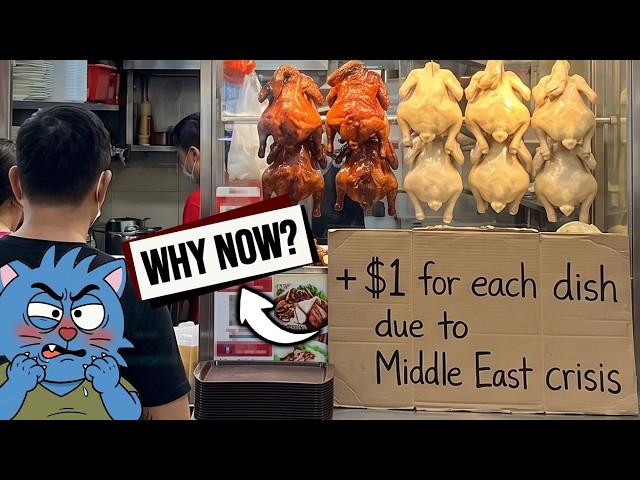
Explaining Why Hawkers Are Raising Prices Due to the Middle East Crisis
Business Enquiries: https://www.business.thebluecats.com.sg/The Blue Cats' Instagram: https://www.instagram.com/singaporethebluecats/ --------On 28 Feb 2026, the United States and Israel launched coordinated airstrikes on Iran. Iran retaliated by striking energy sites in the region and blocking the Strait of Hormuz, the narrow waterway that carries much of the world's oil. A ceasefire has since been announced, but the strait is still not fully open, and damaged energy infrastructure could take months to restore.Food prices in Singapore did not spike right after the war broke out because local manufacturers had stockpiles of raw materials and packaging secured beforehand. The president of the Singapore Food Manufacturers' Association said firms have been absorbing the higher costs using these reserves. Once the stocks run out and new orders come in at today's market rates, the full impact will hit.One local soya sauce maker said industrial diesel jumped from $1.20 a litre in late February to $3 a litre on 10 Apr 2026. The firm is still absorbing the cost but may raise prices in May.Ingredient prices are climbing too. Chef Bob said coconut milk rose from $4.70 to $6.30 per litre, and cost of goods sold is expected to increase 20% to 25% in the coming weeks. KF Seetoh has urged hawkers to raise prices to stay afloat.CNA reported that some hawkers have already raised prices by up to $1. Transport fuel is part of the reason. Ingredients need to be moved around, and higher diesel costs get passed down to the stall.The slow pace of oil tankers explains the delayed impact. These ships travel at 12 to 15 knots and take 13 to 25 days to sail from the Persian Gulf to Singapore. Tankers loaded before the blockade kept supply going through March, but the ADNOC CEO confirmed the final pre-war cargoes are arriving now. After this, the pipeline is empty.
Other

One-stop lifestyle app dedicated to making life in Singapore a breeze!




 English
 简体中文
简体中文
Comments
Leave a comment in Nestia App