From Nike to Starbucks, tariff relief for stocks is fleeting
America’s top retailers and manufacturers are getting long-awaited relief from President Donald Trump’s sweeping global tariffs. But for some of the hardest hit companies, the share price benefits pale in comparison with the massive losses they suffered on Liberation Day.
When Trump’s tariffs were announced in April 2025, they dealt the S&P 500 its worst day in five years. Investors had expected refunds, which started trickling in this summer after the Supreme Court struck the levies down, to provide a meaningful tailwind, yet stock reactions to the refunds have largely been muted. And any boost that equities got from these cash infusions is likely to quickly fade, just as a trade spat between the US and Canada reignited in recent weeks.
In the latest tit-for-tat, Canada imposed tariffs of up to 50% on hundreds of US products in response to a similar move by the US last month. With trade tensions flaring up again, Wall Street strategists are in no rush to price out the costs baked in under the Trump administration’s policies.
"These are non-recurring, they’re not operating revenue and investors will discount that when making judgments on a company’s earnings,” said Marshall Front, chief investment officer at Front Barnett.
"Sure, it’s free money but it’s not likely to happen again.”
The companies receiving the checks include a mix of small, mid and large-cap stocks concentrated in import-heavy industries like retail, industrials and electronic hardware. Target Corp., Walmart Inc., Nike Inc. and Starbucks Corporation are among those seeing a boost from the cash infusion. Industrial companies like Caterpillar Inc. and electronic component manufactures like Applied Optoelectronics Inc. are also among beneficiaries.
Nike’s stock sank 14% on April 3, 2025, the day after Liberation Day, to its lowest level since November 2017. Fast-forward over a year later, the stock only briefly bounced before retreating after the athletic footwear giant said during a June 30 earnings call it expected to collect nearly $1 billion in tariff refunds. The cash infusion, which wasn’t taken into account in earlier guidance, will help offset the company’s cost of sales, according to the earnings call.
Similarly, Starbucks declined 11% after the tariff announcement, the most since May 2024. The company’s shares were muted after its third-quarter earnings print this year, rising just 1.6% as it disclosed refunds that offset other tariffs it had incurred throughout the fiscal year, according to a company statement.
"The question about what future tariffs will look like is dramatically more important to the health or pain of the business than the difference between adding cash to your balance sheet from tariff refunds versus adding it from generated income,” Guggenheim Securities analyst Simeon Siegel, who covers Nike, said.
Since the Supreme Court ruled in February that levies under the International Emergency Economic Powers Act were illegal, roughly $100 billion had been sent to the US Treasury for disbursement as of the end of July, based on data collected from the US Customs and Border Protection. Some 88 companies discussed tariff refunds in the most recent quarter, with receipts estimated to be at least $15 billion, based on calculations by Bloomberg Intelligence. More are likely on the way.
"There’s little reaction now because the markets and analysts priced this in when the ruling came out,” said Eric Sterner, chief investment officer at Apollon Wealth.
‘A Lottery Ticket’
For some of the smaller companies, the refunds have provided a substantial boost to earnings, greatly improving margins and overwhelming other metrics. But for market strategists, this masks a company’s real performance. Once the checks are in, companies are left with the same underlying businesses.
"Analysts and investors are smart and will look through those earnings and take them out when they calculate the profitability,” Front said.
That was the case with Best Buy, which saw its shares tumbling even after it reported an improved full-year outlook in its recent results. With much of the improvement driven by a $34 million tariff refund, investors were skeptical about how long it would last.
"The refund in and of itself, without contemplating the future tariff cost, is no different than the company winning a lottery ticket,” Siegel said. "It doesn’t make the business a better business, it just gives it more cash.”
Still, some long-term benefits are possible depending on how the cash is used.
"Some of these tariff refunds will be used for paying dividends to shareholders and doing buybacks,” Apollo Management Partner Torsten Slok said. "But some of the money will also be invested in capex such as AI.”
Although more checks may arrive in future quarters, the looming threat of additional duties is obscuring any lasting stock gains. The market has adjusted to a higher cost environment, adding to a belief that tariffs are here to stay.
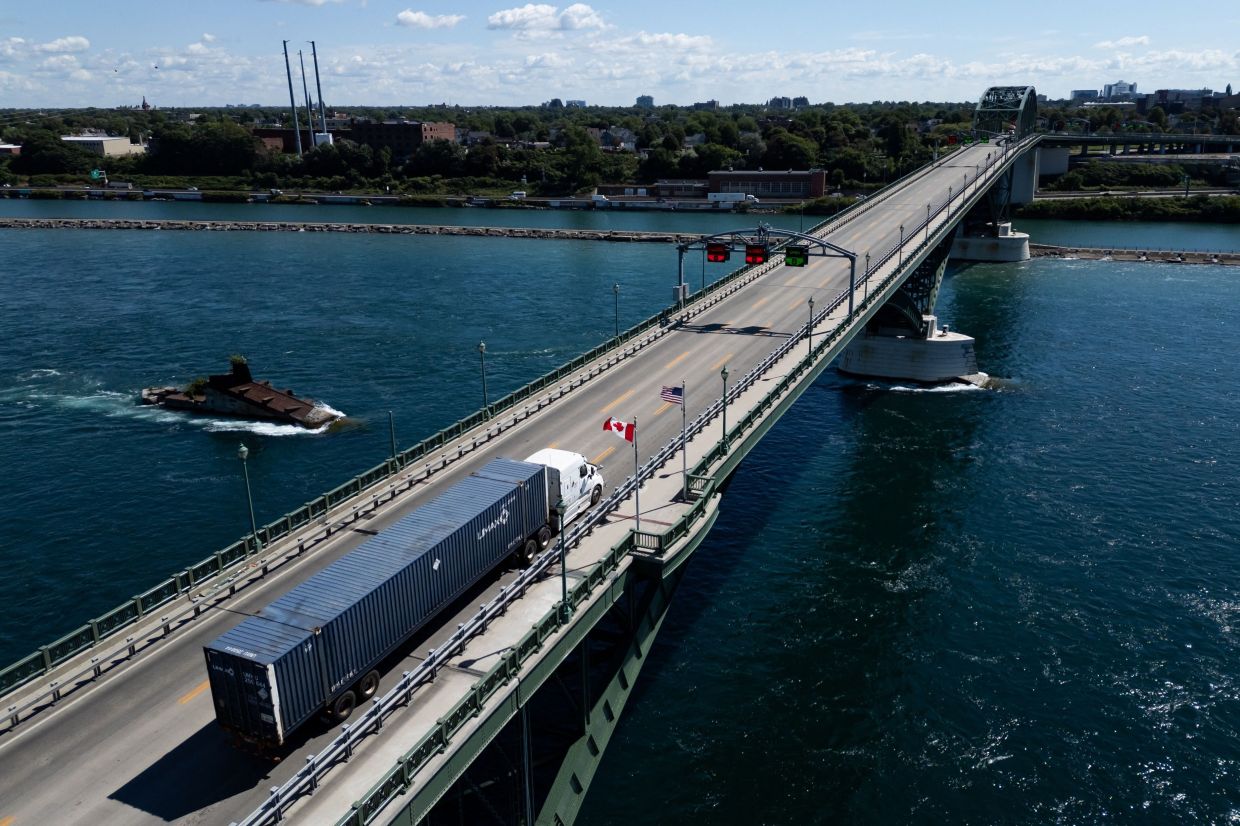
New and threatened tariffs include a 50% tax on roughly $20 billion worth of Canadian goods, an order for 15% tariffs on imported polysilicon used in semiconductors, and a 10% to 12.5% levy on most major trading partners under a forced labor investigation. Trump has also pledged to double automobile duties on Canadian vehicles and parts after trade talks between the two countries broke down.
"The Street is not giving very much credit to companies for large Ebitda beats on tariff refunds because this refund will then have to be lapsed next year,” said Piper Sandler & Co analyst Peter Keith. "It helps 2026, but there’s no impact in 2027.” - Bloomberg
……Read full article on The Star Online - Business
Entertainment Malaysia

One-stop lifestyle app dedicated to making life in Singapore a breeze!




 English
 简体中文
简体中文
Comments
Leave a comment in Nestia App