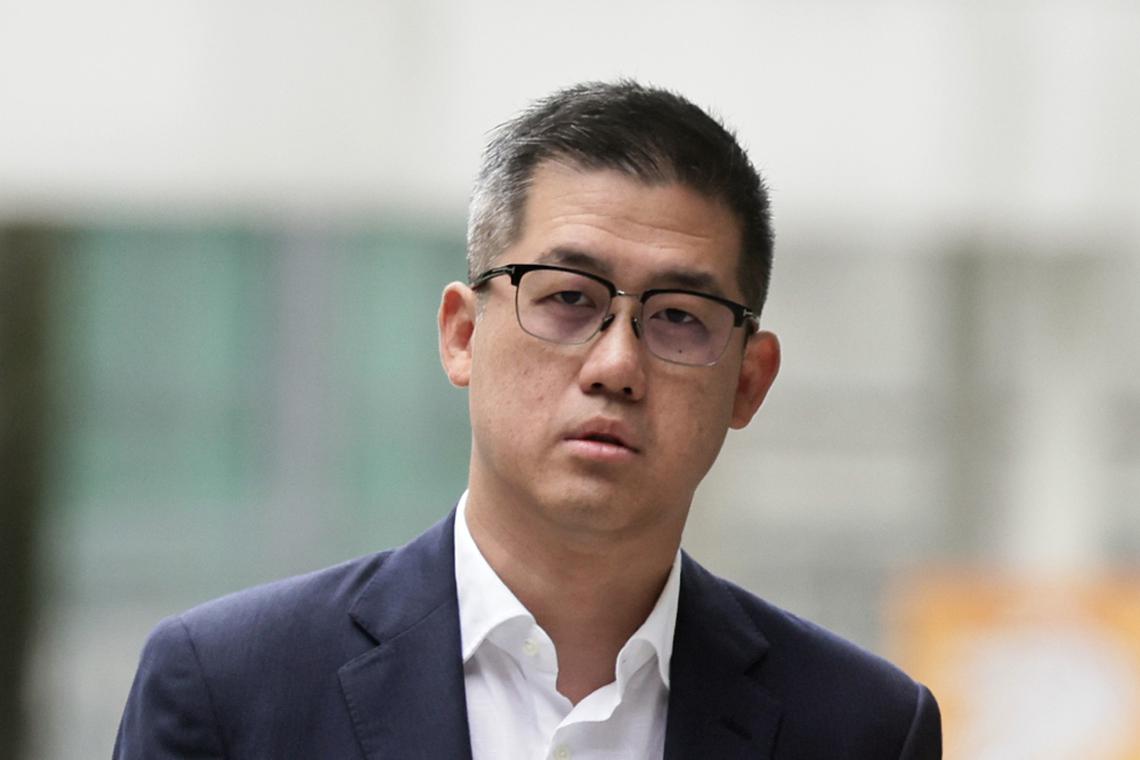
Fullerton Healthcare Corp co-founder admits approving falsified claims of over $213k
SINGAPORE – One of the three co-founders of Fullerton Healthcare Corporation (FHC) approved six expense claim forms submitted by another co-founder, which involved falsified sums totalling over $213,000.
David Sin, 46, approved the claims on multiple occasions in 2019, despite knowing that Daniel Chan Pai Sheng, 51, had submitted them with the intent to defraud FHC, according to court documents.
The prosecution, however, said that Sin did not enjoy financial gains and personal benefit from these offences.
On Aug 21, Sin pleaded guilty to six counts of falsification of accounts.
The third co-founder, Michael Tan Kim Song , 51, was not involved in these offences. All three men are Singaporeans.
The court heard that FHC was in the business of investment holding, and had various subsidiaries, including Fullerton Healthcare Group (FHG) and Fullerton Health China.
Deputy public prosecutors David Menon, Jonathan Tan and Ashley Chin stated in court documents that Tan and Chan were medical doctors by training.
In 2010, the pair co-founded FHG, which provided healthcare solutions to corporations.
Some time between 2010 and 2012, Tan approached Sin to invest in FHC. Sin decided to do so in 2013 through a firm called Sin Capital Group, where he was chief executive at the time.
In 2014, he employed Mr Tei Chu Pink, 45, to be the director of Sin Capital’s investment team based in Hong Kong.
Investigations revealed that four years later, Chan approached Mr Tei, a Malaysian, to claim certain business expenses from FHC.
The DPPs said: “Daniel (Chan) told (Mr Tei) that the business expenses would be paid from Fullerton Health China’s accounts, using inflated entertainment invoices, and that Michael (Tan) had consented to the arrangement.”
According to the prosecution, Chan also told Mr Tei the payments were for “consultancy services” provided by Collin Chiew, 57, who was the Singaporean chief executive of insurance broker Aon Singapore between January 2015 and July 2018.
Mr Tei relayed this information to Sin, who consented to the arrangement.
The DPPs told the court that in 2019, Chan submitted for Sin’s approval six claim forms listing purported expenses of more than $334,000 in total, even though the actual expenses were less than half the amount – over $120,000.
Sin approved the claims despite knowing that they had been inflated by more than $213,000.
On Aug 21, the DPPs urged the court to sentence him to a fine of between $150,000 and $180,000.
They said the amount involved was substantial. However, they also noted that Sin was not the mastermind behind the offences.
He is represented by lawyers Melanie Ho, Tang Shangwei and Neo Yi Ling, who pleaded for their client to be fined $120,000 instead.
The team from WongPartnership said he “trusted and assumed his co-founders had good reasons for deciding to pay Collin (Chiew) in such a manner”.
They added: “With the benefit of hindsight, (Sin) accepts that he ought to have done better and should not have turned a blind eye to the breach of corporate governance.”
Sin is expected to be sentenced in the afternoon of Aug 21.
Separately, he faces seven more charges for offences including graft.
Without revealing any details, DPP Tan told the court that the prosecution intends to apply for him to be given a discharge amounting to an acquittal over these remaining charges.
Individuals given such a discharge cannot be charged again over the same offences.
In February 2024, t he four Singaporeans – Sin, Chan, Tan and Chiew –
were charged with offences including graft
.
The Corrupt Practices Investigation Bureau said in an earlier statement that at the time of the alleged offences, Sin was FHC’s president, Chan was the president of Fullerton Health China and Tan was a director at FHG. They no longer hold the positions in the companies.
The cases involving Chan, Tan and Chiew are still pending.
Read full article on The Straits Times - Singapore
Singapore

One-stop lifestyle app dedicated to making life in Singapore a breeze!









 English
 简体中文
简体中文
Guji 29/08/2025
face like fxxx once admitted
Reply