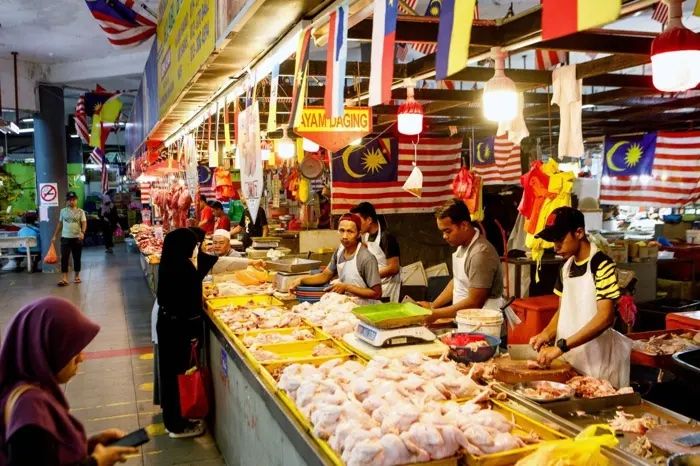
Higher food and energy prices advance inflation
PETALING JAYA: Inflation in the food and non-alcoholic beverages segment rose to its highest level in nearly a year in August 2026.
Malaysia’s Statistics Department reported that prices increased by 1.9% year-on-year in August, compared to 1.8% in July, as food-at-home inflation continued to rise.
Phillip Capital Research in a report said overall consumer price index inflation also accelerated slightly to 1.9% year-on-year in August from 1.8% previously, marking the first increase after two consecutive months of easing.
“Food and non-alcoholic beverage inflation saw a rise to the highest level in nearly a year, as food at home inflation trended higher,” the research house said.
It added that housing, water, electricity, gas and other fuels inflation rose to 2.1% from 1.8%, mainly due to higher electricity tariffs under the Automatic Fuel Adjustment, while transport inflation rebounded to 2% from 1.4% amid higher unsubsidised motor fuel prices.
“Inflation risks remain modestly tilted to the upside in the remaining months of 2026, driven by higher crude oil and food prices,” Phillip Capital Research said yesterday.
“Crude oil prices rebounded to above US$100 per barrel in September, up from an average of around US$88 per barrel in August, while global food price inflation accelerated to 2.5% year-on-year in August after two consecutive months of easing,” it added.
Despite the risks, the research house expects domestic inflation by and large to remain relatively contained due to subsidy measures including the restoration of the Budi95 monthly quota to 300 litres, a higher diesel quota for eligible vehicle owners and an increased electricity bill protection threshold.
“Against this backdrop, we maintain our 2026 headline inflation forecast at 1.8%.”
It expects Bank Negara Malaysia (BNM) to keep the overnight policy rate (OPR) unchanged at 2.75% for the remainder of 2026.
Meanwhile, Kenanga Research also pointed out food and beverage inflation had reached its highest level since September 2025, on the stronger food-at-home prices.
“Food and beverages reached their highest level since September 2025 on food at home, with vegetables jumping 2.8%, led by tomatoes at 38.2%, while chicken prices rose 8%,” it noted.
Kenanga Research said the three categories that led the pickup in inflation were transportation, housing and food prices.
The research house said headline inflation increased slightly above its forecast and consensus, while core inflation eased to 1.7% from 1.8%.
Kenanga Research said higher energy costs were increasingly feeding into selected parts of the domestic economy, although government subsidies continued to cushion the impact.
“Ron95 stays fixed under Budi95, but airfares and freight-sensitive food items continue to rise,” it said.
Kenanga Research lowered its 2026 inflation forecast to 1.9% from 2.1%, citing the cushioning effect of subsidies.
“We expect BNM to hold the OPR at 2.75% through 2026, even as the Federal Reserve and European Central Bank resume hiking (rates),” it said.
“With inflation below 2%, the real policy rate stays positive, giving BNM room to look through supply-driven price moves.”
Apex Securities Research, meanwhile, said the modest pickup in inflation was largely driven by transport and electricity costs, while underlying price pressures remained subdued.
“Headline inflation edged up to 1.9% year-on-year in August from 1.8% in July, marginally above the consensus of 1.8%.”
It said core inflation eased further to 1.7%, the lowest since December 2024, suggesting some moderation in domestic demand pressures.
……Read full article on The Star Online - Business
Entertainment Malaysia

One-stop lifestyle app dedicated to making life in Singapore a breeze!




 English
 简体中文
简体中文
Comments
Leave a comment in Nestia App