Indonesia's rupiah near 4-month high as dollar weakens, inflows improve
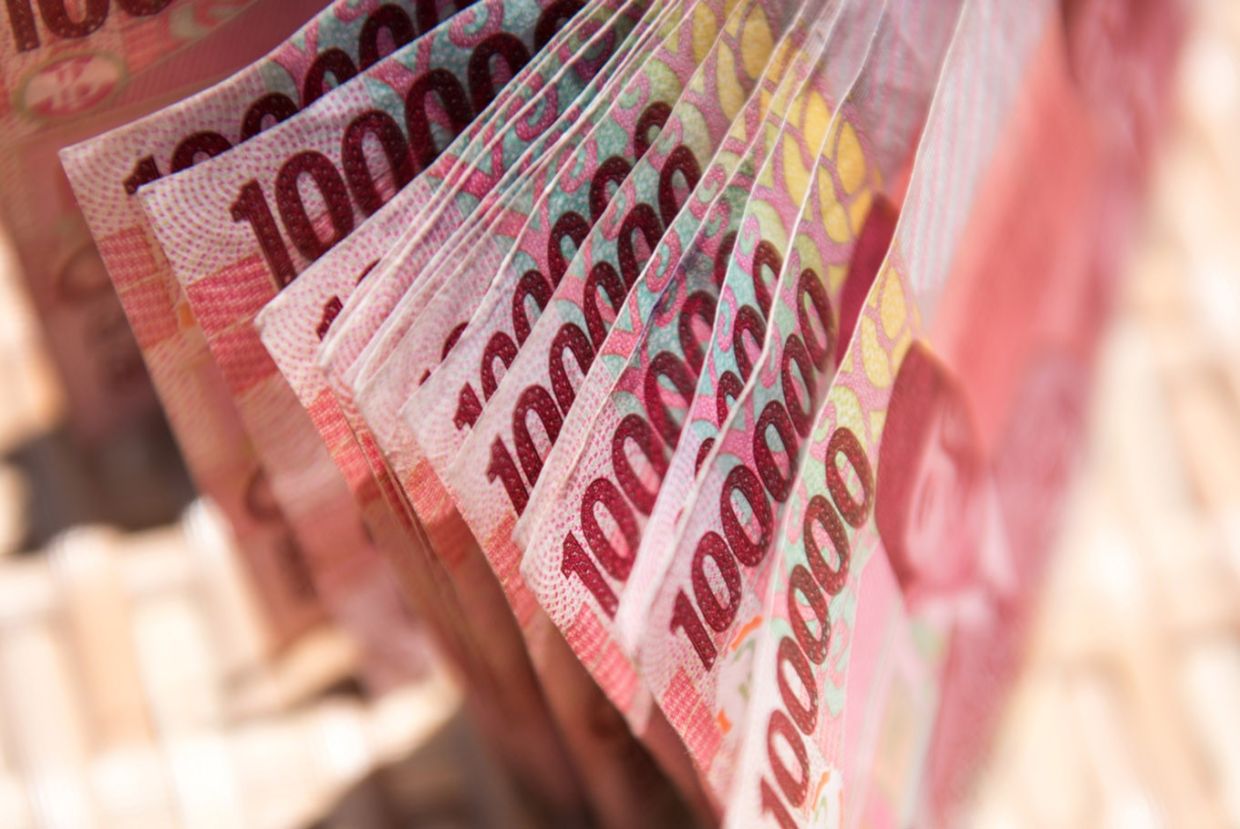
Indonesia's rupiah rose to a near four-month high on Wednesday, propping up emerging Asia currencies, aided by a weaker dollar and improved investment inflows into the country.
An MSCI gauge of global EM currencies edged 0.1% higher against the U.S. dollar, after the greenback came under pressure from higher oil prices ahead of the crucial U.S. inflation data later in the week.
The rupiah gained the most among regional currencies, striking its highest level since mid-May at 17,535 a dollar.
The weaker global dollar and improving capital-flow environment drove the rupiah's gains for the day, said Fakhrul Fulvian, chief economist at Trimegah Securities.
The currency is down a little more than 5% for the year, making it among the worst-performing in the region. It depreciated the most in the second quarter of 2026, shedding 5.2%, as Southeast Asia's largest economy grappled with crude price shocks and concerns about fiscal discipline, central bank independence and stock market regulation.
Indonesia still needs meaningful foreign inflows to maintain a comfortable external balance, said Fulvian.
"Our estimate remains around $11 billion, so I would not say the rupiah's vulnerability has disappeared."
Elsewhere, Malaysia's ringgit weakened to 4.0680 per dollar, hovering near its lowest level since mid-August.
In equities, the MSCI EM Asia equities index, dominated by AI tech-heavy South Korea and Taiwan, rose as much as 1%.
South Korea's KOSPI gained as much as 2.3%. Shares of chipmaker Samsung Electronics rose as much as 2%, while peer SK Hynix gained as much as 5%, on track for its fourth consecutive session of gains, after the Philadelphia Semiconductor Index rose 1.3% overnight.
In Southeast Asia, Jakarta stocks fell 0.5%, while those in Taipei and Manila gained 0.4% each. Thailand equities edged lower, and those in Malaysia was flat.
Singapore's FTSE Straits Times Index shed as much as 1.1%, and was on track for its third consecutive session of losses.
"I see Singapore's recent weakness partly as a consequence of its previous strength. After being one of Asia's strongest markets, worsening global conditions naturally create some profit-taking and valuation adjustment," said Fulvian.
Fulvian views the drop as less the end of Singapore's structural equity story and more as a "repricing of one of Asia's strongest-performing markets" against a less benign global backdrop.
The Singapore dollar was flat. Elsewhere, the Thai baht was flat, while the Philippine peso weakened slightly to 62.421 a dollar. The won and the Taiwan dollar saw mild strength against the greenback.
China's yuan rose against the U.S. dollar and hovered near a 3-1/2-year peak as better-than-expected inflation data and quicker export growth buoyed the currency.
HIGHLIGHTS:
** Malaysia's July industrial production up 4.7% on year, below forecast
** Thailand's monetary policy should remain accommodative to support recovery, central bank minutes show
** Japan's Nikkei rallies as AI exuberance overrides Iran war concerns
** Indonesia aims to open 200 million new bank accounts for unbanked citizens, minister says - Reuters
……Read full article on The Star Online - Business
Entertainment Malaysia

One-stop lifestyle app dedicated to making life in Singapore a breeze!




 English
 简体中文
简体中文
Comments
Leave a comment in Nestia App