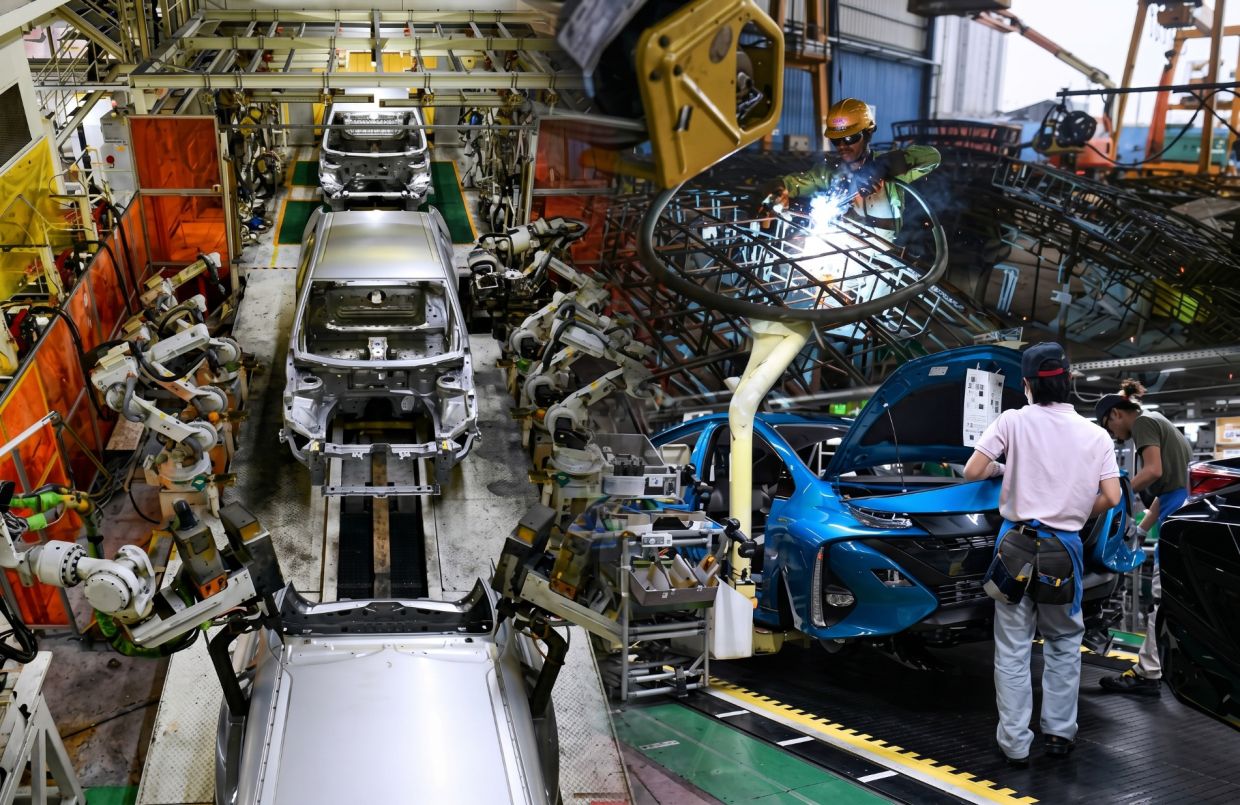
Malaysia manufacturing PMI slips into contraction in September
KUALA LUMPUR: Malaysia’s manufacturing sector slipped into contraction in September, with the S&P Global Malaysia Manufacturing Purchasing Managers’ Index (PMI) falling to 49.9 from 50.2 in August.
The decline ended three consecutive months of improving operating conditions.
S&P Global Market Intelligence economist Maryam Baluch said the September data painted a mixed picture for Malaysia’s manufacturing sector.
“Employment increased and easing inflationary pressures were positive signs, but moderations in output and new orders, alongside weaker business confidence pointed to subdued business conditions.
"Additionally, external uncertainties — notably the ongoing war in the Middle East and El Niño — make the outlook for the year difficult to assess.
“Nevertheless, continued employment growth suggests that firms remain willing to expand capacity despite these headwinds,” she said.
Based on the historical relationship between the PMI and official GDP data, S&P Global said the latest reading suggests Malaysia’s economy continued to expand solidly in the third quarter.
It added that official manufacturing production is also expected to remain in growth territory, although the pace of expansion could ease slightly.
The recent improvement in operating conditions ended as new orders declined for the first time in four months and at the sharpest pace since June 2025, reflecting subdued underlying demand.
S&P noted that the slowdown in total new orders came despite a renewed rise in export orders in September, although growth was marginal.
With overall demand easing, manufacturers cut output for a second straight month, with the decline the fastest in seven months, albeit modest.
Faced with weak demand and lower production requirements, manufacturers cut purchasing activity for a second straight month, although the decline remained marginal.
Firms cited sufficient inventories, limited availability of goods and weak inflows of new orders.
Average input delivery times lengthened in September due to port congestion, shipping container shortages, adverse regional weather and higher fuel prices, resulting in the sharpest deterioration in supplier performance in three months.
Despite lower purchasing activity and longer delivery times, manufacturers increased stocks of pre-production items in September, partly due to safety stockbuilding amid the ongoing Middle East conflict.
The increase, although marginal, was the strongest since June 2022.
“Confidence in the year-ahead outlook weakened slightly and remained subdued overall, with the respective index falling to a five-month low.
“Some firms expected market conditions and demand to improve over the coming year, but others were more cautious in the outlook,” S&P said.
“The main positive from the latest survey was a second successive monthly increase in employment. The pace of job creation edged up to its fastest since April, with firms increasing both full-time and contract staffing.”
Meanwhile, cost pressures eased further in September, with input price inflation slowing for a fifth straight month to its lowest since February despite higher raw material and supplier prices.
Output prices also rose at the slowest pace in seven months.
……Read full article on The Star Online - Business
Entertainment Malaysia

One-stop lifestyle app dedicated to making life in Singapore a breeze!




 English
 简体中文
简体中文
Comments
Leave a comment in Nestia App