Malaysian Banks Might Not Have Enough Money To Loan To Data Centres
Subscribe to our FREE Newsletter, or Telegram and WhatsApp channels for the latest stories and updates.
Depending on how much you like data centres, good news (or bad news) – they’re not leaving anytime soon.
Credit: S&P Global, S&P Global Ratings
So, S&P Global Ratings – a credit rating agency which does financial research and analysis on stocks, bonds and commodities – recently published a statement that said Malaysia is still in demand as a data centre hub because of our country’s strategic location, robust connectivity, and available land.
These plus points are so strong that the firm projects Malaysia’s data centre capacity to nearly triple by 2030, expanding at a 32% compound annual growth rate (CAGR).
Johor, at the moment, is still the dominant hub, accounting for roughly 80% of the country’s leased capacity, with Cyberjaya (14%) and Kuala Lumpur (5%) rounding out the market.
While rising electricity costs have slightly narrowed Malaysia’s cost advantage over Southeast Asian peers, its regional resource constraints mean demand probably won’t migrate to neighbouring countries anytime soon.
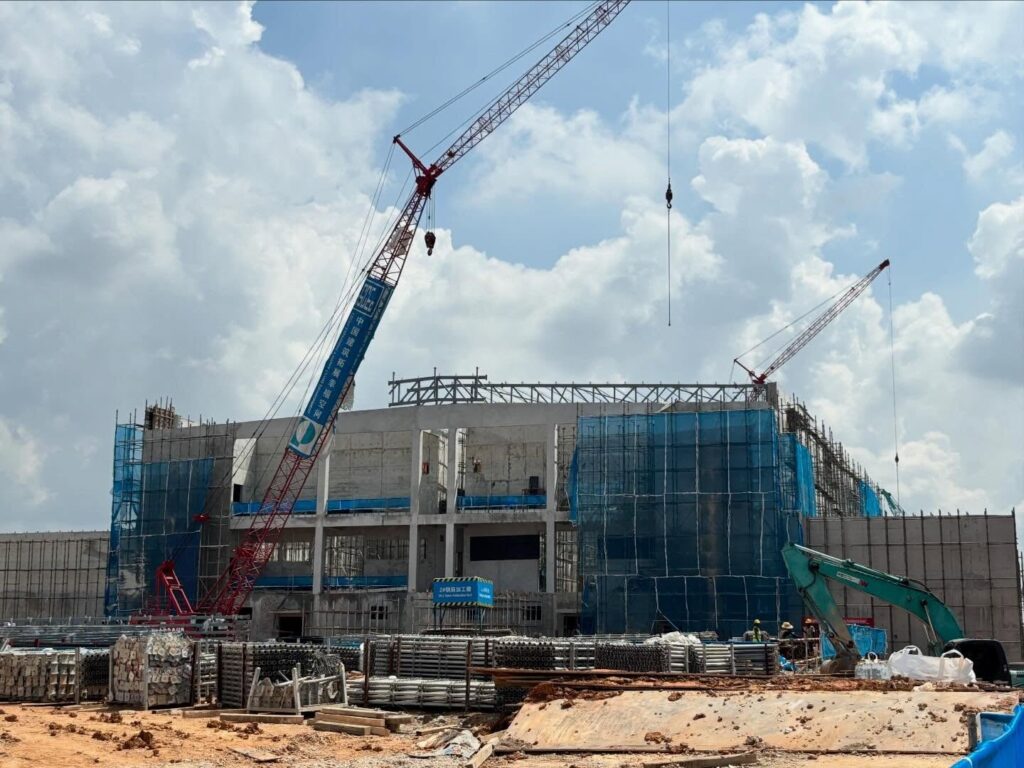
Credit: Lee Ting Han FB
To sustain this rapid expansion, developers need over USD20 billion (about RM81.9 billion) over the next three years. All of that money will go to building out powered shells, power and cooling infrastructure, and core equipment.
And that’s not including costs for AI chips.
That is a lot of dough, and because of sector concentration thresholds and the sheer scale of incoming projects, S&P said that domestic banks might not be able to measure up.
Which is why developers are expected to turn to some alternative financing avenues, like project financing, private credit, or structured financing.
This may allay the concerns of data centres – S&P highlights that Malaysia is deliberately pacing its expansion to focus on long-term sustainability rather than unchecked growth.
Local authorities are already raising the bar. Johor, for example, has paused approvals for less efficient Tier 1 and Tier 2 data centres that consume higher levels of power and water.
However, even with stricter environmental standards, data centres are projected to account for 31% of Malaysia’s total electricity demand by 2035 (up from 7% today). Supporting this surge will require national power generation capacity to scale from 27GW up to 40GW.
Ultimately, the market’s long-term success will depend on securing diverse capital while upgrading critical utility infrastructure to keep pace.
Share your thoughts with us via TRP’s Facebook, Twitter, Instagram, or Threads.
……Read full article on The Rakyat Post - News
Other

One-stop lifestyle app dedicated to making life in Singapore a breeze!




 English
 简体中文
简体中文
Comments
Leave a comment in Nestia App