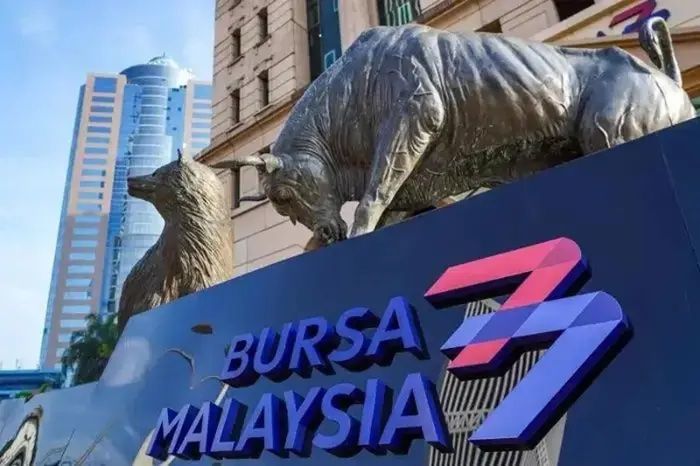
Meaningful boost for Bursa Malaysia?
ON June 9, the regulators in Malaysia launched the MY Value Up Programme Guidebook, to aid public-listed companies (PLCs) in creating medium to long-term value plans to “transform them into globally attractive investment propositions”.
The programme is voluntary and targeted at the larger companies listed on Bursa Malaysia.
It adapts the programmes that have been launched by Japan and South Korea, and was launched soon after the three-year PLC Transformation Programme concluded at the end of 2025.
This earlier programme had little perceptible impact on the overall financial performance of Malaysian-listed companies or of the market as a whole.
Could MY Value Up have greater effect?
Whilst we see the guidebook as providing the right direction for companies to focus more on shareholder value, it would benefit from greater prescriptiveness to drive improvements in financial performance, along with meaningful incentives for companies to get on board.
The plan will certainly evolve from here with indications it may become mandatory by 2028.
As the programme develops, it may yet become a stronger impetus for shareholder returns in the Malaysian market.
MY Value Up programme
The MY Value Up programme was announced by the Securities Commission (SC) and Bursa Malaysia in April as an initiative under the Capital Market Masterplan 2026-2030.
It seeks to encourage listed companies to develop and communicate clear growth strategies, targets and capital allocation priorities; in parallel it aims to promote stronger investor engagement and greater board-level focus on value creation.
The guidebook provides practical applications for these principles.
The SC and Bursa will engage with the targeted listed companies for the submission of the MY Value Up Plans over 2026.
Targeted companies are expected to begin publishing MY Value Up plans to the public, to establish a baseline enabling more informed investor engagement and feedback by 2027.
As part of the initial rollout discussions, the regulators have met with 88 of the largest listed companies with market capitalisation of about RM4bil (US$1bil) or higher, representing some 80% of Bursa Malaysia’s total market capitalisation.
Participation is voluntary for the corporates but highly encouraged for the larger companies in the market.
The regulators state that from 2028, MY Value Up may transition into mandatory disclosure requirements.
MY Value Up does not mandate specific performance targets, eg, return on equity (ROE), total shareholder returns, or price-to-earnings ratio for participating companies.
Instead, each listed company is to determine the metrics, targets and strategies most relevant to its business, industry and long-term value-creation objectives.
These are to be set through the leadership and oversight of the board and senior management.
The regulators recommend that the targets be reasonable yet aspirational, and participating companies disclose concise, board endorsed plans that outline how management intends to improve business performance and shareholder outcomes in the medium to longer term.
The recently launched guidebook sets out expectations and minimum considerations to be taken into account in developing the respective Value Up Plans.
Value Up Plans are intended to communicate the company’s strategic priorities, intended direction and value-creation initiatives.
The regulators state that listed companies would not ordinarily be subject to misstatement or market conduct concerns solely on the basis that stated objectives are not ultimately achieved or if outcomes differ from expectations, provided that the disclosures are made on a reasonable basis, in good faith and accompanied by clear explanations.
Voluntary programme, what are the incentives?
Incentives are currently being explored in discussions with relevant stakeholders, including selected listed companies, to encourage meaningful participation in MY Value Up.
The consultative approach is for any incentives to be appropriate and well targeted. For now, enhanced disclosures of Value Up Plans will be voluntary, but the larger listed companies are strongly encouraged to participate.
In early 2027, the list of companies that disclosed their Value Up Plans will be published, to give them favourable spotlight and for stakeholders to have visibility into their commitment and progress.
The regulators will not, however, review or provide feedback on the participating PLCs’ Value Up plans.
A dedicated MY Value Up-related index is being explored and may be announced at a later date.
Participating companies are encouraged to adopt a structured process to identify where value may be constrained and to formulate credible initiatives to enhance long-term performance.
This process is intended to support strategic ambition as well as prudent stewardship, recognising the need to balance growth, resilience, capital discipline and shareholder expectations.
The regulators recommend the approach to be board-led, disclosure-orientated and embedded into management and investor engagement processes.
Turnaround for market performance?
As we highlighted in the Asian Corporate Governance Association’s (ACGA) Value Up, Asia report published in April 2025, ROE for the Malaysian market has trended down over the last 10 years.
Will MY Value Up mark a turnaround in returns? It has some ingredients we consider promising.
By 2027, listed companies that publish Value Up plans will be publicly named.
This will encourage companies to get on board rather than be perceived as not placing emphasis on good returns for their shareholders.
An index of companies participating in the Value Up programme may also be launched; we believe this could also lead to a greater push for companies to participate, especially if the large domestic asset owners and managers tilt their portfolios towards the MY Value Up index.
However, for the programme to deliver improved financial returns for both companies and the broader market, it needs a stronger emphasis on capital allocation decisions linked to companies’ cost of capital: this is a central element of the Value Up programmes in South Korea and Japan.
ACGA also advocates for clearer and explicit alignment of incentives of senior management with emphasis on financial performance and total shareholder returns to incentivise senior management to drive shareholder value.
Increasing the ROE generated by companies, both individually and in aggregate for the market, is fundamental to long-term market performance.
As the programme evolves and potentially becomes mandatory by 2028, it may yet provide a more meaningful framework for corporate Malaysia to generate stronger shareholder returns.
Amar Gill is the secretary-general of the Asian Corporate Governance Association (ACGA). The views expressed here are the writer’s own.
……Read full article on The Star Online - Business
Entertainment Malaysia

One-stop lifestyle app dedicated to making life in Singapore a breeze!




 English
 简体中文
简体中文
Comments
Leave a comment in Nestia App