NEA to use autonomous pavement sweepers at more parks, including at Esplanade and East Coast
More autonomous pavement sweepers have been deployed by the National Environment Agency.
SINGAPORE – Autonomous pavement sweepers have been progressively deployed to clean up Esplanade Park and East Coast Park since April, the National Environment Agency (NEA) revealed in a Sept 4 update on its public cleanliness efforts.
The machines are being trialled as part of the agency’s push to improve cleaning productivity and reduce reliance on manual labour. “(They) could potentially deliver up to 30 per cent productivity savings for routine pavement cleaning,” NEA told The Straits Times.
Such sweepers were first deployed in Bishan-Ang Mo Kio Park, in July 2025, and have remained in operation there.
The agency plans to roll out the robots to more parks and park connectors deemed suitable for the technology, it added without providing a timeline.
Amid NEA’s efforts, there has been a dip in Singapore residents’ satisfaction with the cleanliness of shared spaces and public toilets, according to the results of a public survey also released on Sept 4.
The Singapore Management University’s (SMU) latest Public Cleanliness Satisfaction Survey, which is in its seventh edition, found that the 91 per cent of respondents reported satisfaction of the cleanliness of public spaces, according to a composite measure of satisfaction across 20 public spaces.
This figure dropped from 94 per cent in 2023.
Void decks, corridors, and lift lobbies suffered the most significant drop among public spaces, falling from 89.7 per cent in 2023 to 80.9 per cent in 2025.
The drop was bigger for public toilets in coffee shops, which remained the lowest-rated among public toilets, tumbling from 60.2 per cent in 2023 to just 48.3 per cent in 2025.
These coffee shop amenities have been a focus area for NEA.
In the first half of 2026, about 150 enforcement actions were taken against poor-performing coffee shop owners, the agency said in its Sept 4 update.
In 2025 alone, more than 200 enforcement actions were taken against coffee shop owners for offences like failing to keep toilets clean and failing to maintain sanitary fittings in good working condition.
Apart from the autonomous pavement sweepers, NEA is also using technology in other areas to enhance its cleaning operations and inspections.
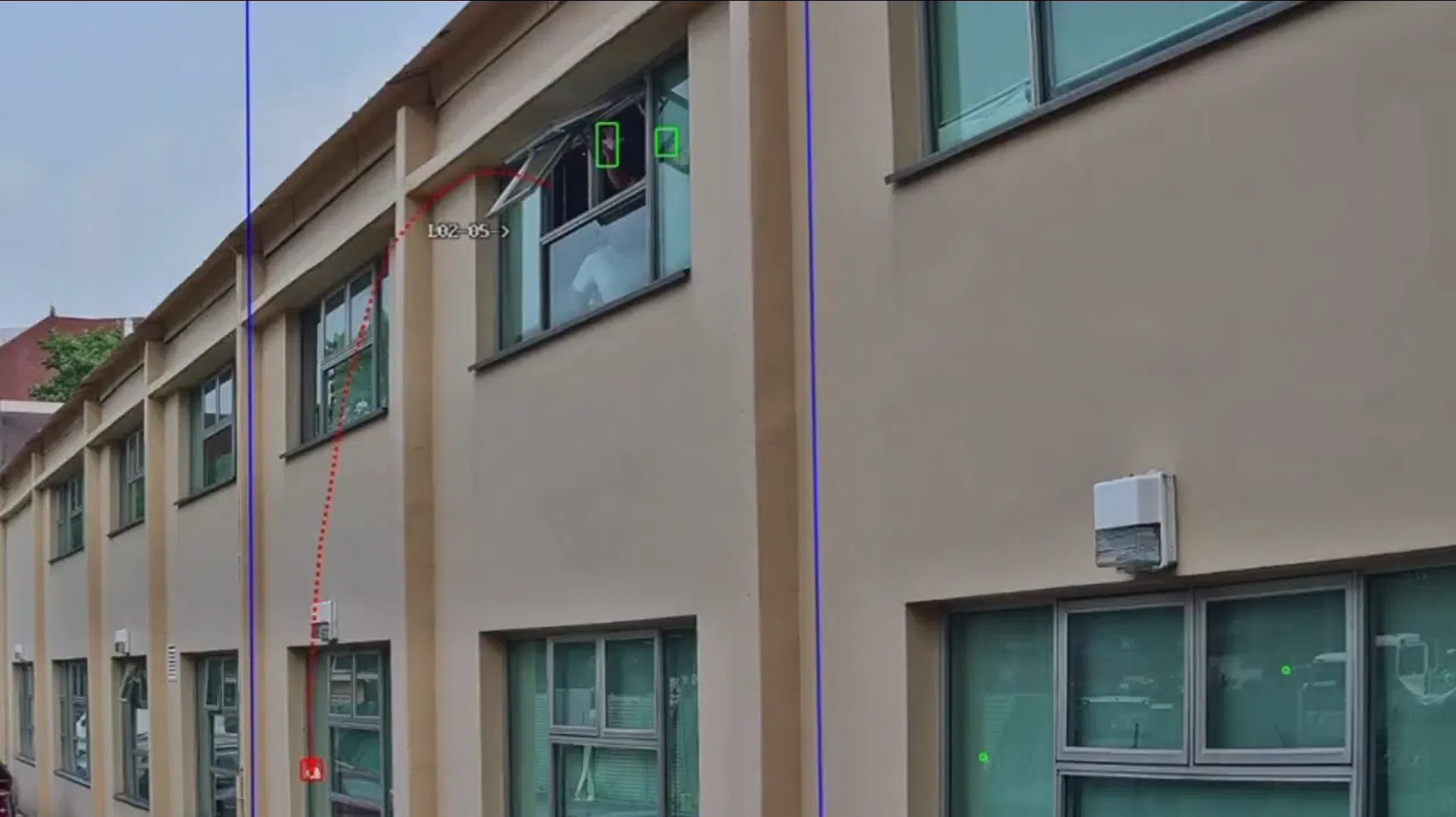
More high-rise litterbugs have been caught with the use of a software that can trace the path of objects thrown from flats, it said.
The tracing software, which was deployed in July 2025, was showcased at a media seminar on Sept 1. It is applied to surveillance camera footage to track objects ranging from tissue paper to bottles, supporting evidence-led investigation and enforcement.
High-rise litterbugs are hard to catch because surveillance footage has to record these unpredictable acts and the unit they originate from.
In 2025, NEA conducted roughly 2,200 camera deployments for high-rise littering, up from about 2,100 in 2024. This resulted in about 500 enforcement actions for such offences, which remained around the same as the previous year.
On a positive note, the agency issued fewer warning letters and fines to diners who failed to clear their used trays, crockery and litter on the table.
In first half of 2026, the average rate of tray and crockery return was 94 per cent at hawker centres, considerably higher than the 65 per cent in August 2021 before the start of table littering enforcement.
NEA issued 52 warning letters, which are issued to first-time offenders, a drop from 628 of such letters handed out in the first half of 2025 and 2,984 in the first half of 2024.
The number of fines given to repeat offenders also decreased from seven annually in the first half of both 2025 and 2024, to three in the same period in 2026.
NEA’s results regarding tray return mirror what was found in SMU’s latest survey, where 95.5 per cent of respondents declared that they did so.
Returning trays and crockery appears to have become a social norm for Singapore’s residents, said sociologists Paulin Tay Straughan and Mathew Mathews, both of whom led the SMU survey.
The survey was carried out from December 2025 to April 2026 among 2,007 Singaporeans and permanent residents aged 21 and above.
As in SMU’s previous surveys, most respondents claimed that they return their trays and crockery because it is the socially responsible thing to do, rather than to avoid being fined.
Social responsibility was the most commonly cited motivation for returning trays and crockery, at 77.7 per cent.
This was despite a decline in awareness of the enforcement, with 92.2 per cent aware that not returning trays incurred a fine, down from 95.2 per cent in 2023.
Mathews, principal research fellow at the Institute of Policy Studies, said: “That’s partly because I think a lot of people have internalised the fact that actually we all do it, so why do we need (enforcement)? But I think this will be a different story if we’re talking about a decade ago or some years before the enforcement, when a lot of people did not even feel that they were responsible for (returning their trays).”
In the 2021 wave of the survey, before a fine was introduced in 2022 for those who did not return their trays, 58 per cent of respondents felt that individual patrons using the tables were primarily responsible for tray return. This figure stood at 83.3 per cent in the latest survey.
However, there was less motivation to participate in wide community efforts to clean up.
The survey found that while the majority of respondents viewed that residents and cleaners had a shared responsibility for keeping areas clean, fewer were willing towards actively participating in community cleanliness exercises.
The proportion of those willing to volunteer with a neighbourhood cleanliness group dropped to 49.6 per cent in 2025, from 63.5 per cent in 2023. Support for community litter-picking exercises also fell, from 83.7 per cent to 76 per cent.
Straughan, professor of sociology (practice) at SMU, said the findings show that the challenge now is to move from awareness about cleanliness to action, embedding a culture where individual and community efforts to keep shared places clean are routine, visible, and valued.
She said: “If we want more proactive action, intervention and partnership from people who use these spaces regularly, then we have to work with them to empower them to own them.”
……Read full article on The Straits Times - Singapore
Singapore

One-stop lifestyle app dedicated to making life in Singapore a breeze!





 English
 简体中文
简体中文
Don Quan 07/09/2026
it is always good to have an alternative means for the job
Reply