S’pore’s domestic recycling rate drops to all time low of 11%
SINGAPORE - The household recycling rate in 2024 dipped to a record low of 11 per cent in 2024, a decline from the previous low of 12 per cent in 2023 and 2022.
This is despite initiatives to encourage more household recycling, such as the
to all homes here.
The National Environment Agency (NEA) told ST that the dip was largely due to less paper and cardboard waste being recycled.
The domestic recycling rate for 2024 was released by NEA on July 23 as part of its waste statistics for the year, which also showed a decline in Singapore’s overall recycling rate.
In 2024, Singapore’s overall recycling rate was 50 per cent, down from the
. The rate was 60 per cent in 2014.
The overall rate includes waste generated from domestic and non-domestic sectors.
Domestic waste refers to waste from households, shophouses, petrol stations, hawker centres, educational institutions and places of worship. The non-domestic sector includes commercial and industrial premises.
NEA said one reason behind the drop in overall recycling rate over the past decade was the reduction of waste from demolition projects, as well as the lower amount of used slag - waste generated during steel smelting activities - due to fewer such activities here.
These kinds of waste are almost completely recycled.
The drop in overall recycling rate for 2024 was also partially due to less wood waste being processed due to a short-term reduction in wood processing capacity that year, NEA said.
The steep reduction in paper and cardboard being recycled was also a contributing factor to lower recycling rates in 2024. Paper recycling rate fell from 52 per cent in 2018 to 32 per cent in 2024.
A number of factors contributed to this, including t he growing amounts of paper and cardboard waste generated.
The amount of such waste generated across Singapore in 2024 was the highest in the past decade , with 1.27 million tonnes of waste generated .
While the total volume of such waste had initially decreased from 2014 to 201 9, the Covid-19 pandemic and the rise of e-commerce reversed this progress.
Senior Minister of State for Sustainability and the Environment Janil Puthucheary said m ore paper and cardboard had to be thrown away because the business incentives for recycling these materials have weakened.
Such costs include the higher collection costs due to manpower shortage and rising transport costs, higher freighting cost from fuel prices and fluctuating offtake prices.
Recyclables are traded as commodities in the global market, affecting business viability, he added during a visit to a food waste research and development facility on July 23 .
For Singapore’s paper to be recycled, it has to be baled and exported overseas, as there are no local paper pulping facilities.
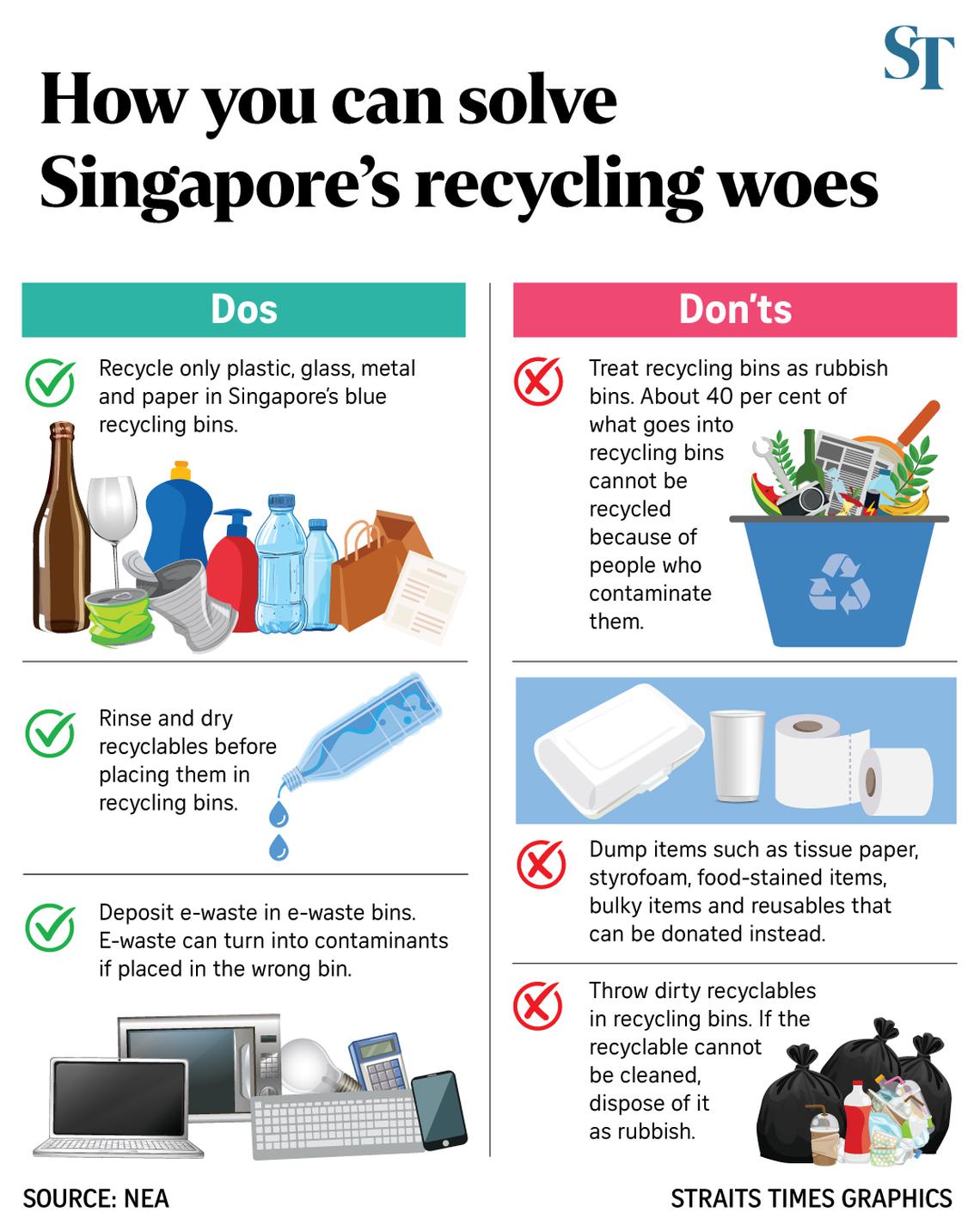
Contamination remains a major challenge for domestic recycling in Singapore. When non-recyclables such as food are thrown into the commingled recycling bins, they contaminate the lot, which must be thrown out.
The contamination rate at such bins is estimated to be about 40 per cent.
Dr Janil announced that Government plans to step up efforts to boost paper recycling.
“We are working with industry to see how we can better support them, given the weakening economics of paper recycling.” he said. “At the same time, we are also looking at how to make paper recycling – especially cardboard – easier, as they tend to be bulky.”
More details will be shared eventually, he added.
The NEA had in March released a
to reduce packaging waste in online shopping. The guidelines were developed by representatives from the e-commerce industry with the support of NEA.
The agency is looking to roll out segregated infrastructure that collects paper recyclables, which could lead to cages being set up around residential estates for such materials. This could pave the way for similar efforts for other waste streams.
Ground-up efforts to increase paper recycling by reducing their contamination in commingled bins have been piloted before.
were set up in 2021 at Housing Board estates managed by the People’s Action Party, which gave residents six cents for every 1kg of paper deposited.
While NEA data also showed that the overall waste being generated in Singapore is trending downwards in both domestic and non-domestic sectors, the flagging recycling rates mean more waste being disposed of.
The daily domestic waste produced per capita has decreased from 0.88kg in 2023 to 0.85kg in 2024. Likewise, the daily non-domestic waste produced per billion dollar of gross domestic product has fallen from about 25 tonnes in 2023 to around 23 tonnes in 2024.
But the total amount of waste disposed rose from 3.04 million tonnes in 2014 to 3.33 million tonnes in 2024. The waste thrown in 2023 was 3.30 million tonnes.
Food waste recycled in 2024 marks a sustained increase from a decade ago, NEA statistics show. This follows new reporting requirements for large food waste generators that kicked in in March 2024.
About 18 per cent of food waste was recycled in 2024, the same as 2023 and 2022. The rate was 13 per cent in 2014.
Large food waste generators at new buildings like hotels, restaurants and food manufacturers have been required to segregate, treat and report their food waste since March 2024.
NEA said the requirements will be progressively expanded from 2027 to existing large commercial and industrial food waste generators, with the completion of a food waste treatment facility at Tuas Nexus.
The food waste collected will be co-digested with used water sludge from the Tuas Water Reclamation Plant, which can produce biogas for energy generation.
The 2024 waste statistics were released in conjunction with the opening of a manufacturing facility and laboratory in Jurong by upcycling firm Mottainai Food Tech.
The Singapore-based startup , so named after the Japanese word for “not being wasteful”, turns food waste into novel products. These include a protein made from okara, the pulp left behind from making soy-based items like soymilk and tofu.
Mottainai Food Tech, in a statement, said the facility is capable of upcycling about 100 tonnes of food manufacturing by-products annually. This is the equivalent to dealing with around 1 per cent of Singapore’s annual okara waste.
Commending the firm’s efforts to make the most out of food waste, Dr Janil said: “In an increasing resource-constrained world, closing the resource loop is crucial...It means nothing goes to waste, the output of one process becomes the input to another process”
Most of Singapore’s non-recyclable waste are incinerated and the ash placed in a landfill. Singapore’s only landfill in offshore island Semakau is expected to be fully filled by 2035.
Dr Janil called on Singaporeans and businesses to take further action in reducing wastage.
“Individuals can do our part by carrying out simple actions such as being careful about how much food we buy and cook, avoiding single-use disposables, and treating our blue bins well by recycling properly,” he said.
……Read full article on The Straits Times - Business
Environment

One-stop lifestyle app dedicated to making life in Singapore a breeze!




 English
 简体中文
简体中文
Comments
Leave a comment in Nestia App