The Blue Cats’ website: https://www.thebluecats.com.sg/
The Blue Cats' Instagram: https://www.instagram.com/singaporethebluecats/
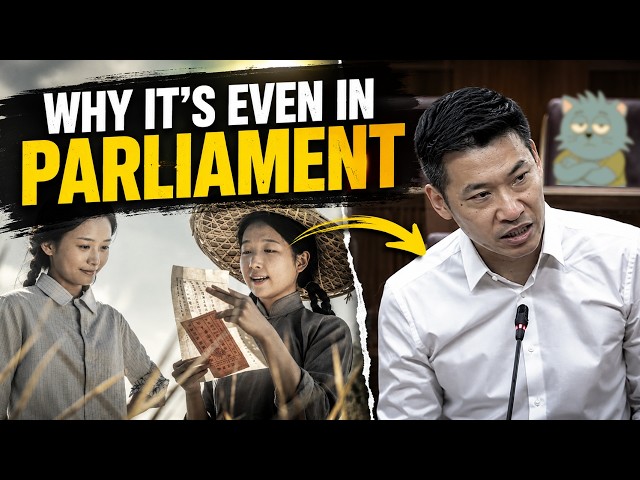
Dear You, or 给阿嬷的情书, is a low-budget Teochew-language film from China that became a sleeper hit at the box office. Because its story centres on the history of Chinese migrants travelling to Southeast Asia, it resonated strongly with audiences in Singapore and Malaysia despite being entirely a Chinese production. Its near-total use of Teochew rather than Mandarin is rare for a commercial film.
The movie opened for general release in Singapore cinemas on 18 June 2026, but only in a Mandarin-dubbed version, with the original Teochew version limited to a handful of special screenings. Singapore's rules state that Chinese films for general theatrical release should generally be in Mandarin, with dialect films allowed only on a case-by-case basis. This stems from the same rationale as the Speak Mandarin Campaign, launched in 1979, which contributed to the share of Chinese households using dialects as their main language falling from 76 per cent in 1980 to 7 per cent in 2025. The policy was never a total ban, and local dialect-heavy films such as 881, Long Long Time Ago and Wonderland received unrestricted screenings, while 30 to 40 dialect films screen at local festivals each year.
Public demand for the original Teochew version surged after the Mandarin release. The first two batches of eight screenings sold out all 9,600 tickets, and 50 additional screenings were then approved. When 40 of these went on sale on 29 June, all 14,000 tickets sold within three and a half hours. As of recording, 272 Teochew screenings had been approved, with more possible depending on demand. Filmmakers including Eric Khoo and Jack Neo publicly questioned whether the Speak Mandarin Campaign rules remain relevant.
The issue reached Parliament on 7 July, with MPs from both the PAP and the Workers' Party raising questions about whether dialect restrictions in film are still needed. An NTU survey of about 600 respondents found 95 per cent supported loosening dialect restrictions in media and 92 per cent preferred watching dialect content undubbed. Authorities are reviewing film classification guidelines on dialect use, stating there is scope to expand space for dialects while continuing to uphold Mandarin, though any change would be gradual. Acting Minister for Culture, Community and Youth David Neo noted that the Speak Mandarin Campaign has evolved from promoting a common language to strengthening Chinese Singaporean cultural identity, with dialects increasingly viewed as heritage rather than competition to Mandarin.







 English
 简体中文
简体中文
Userevz1 16/07/2026
Language should be alive and used daily, not something that is used once in a blue moon. If dialects are not spoken or used regularly, it will die a quick death. Ask anyone from the younger generation if they know how to speak their own dialect, most probably all of them would not. In that case, what's the point of even stating our dialect group on our identity card (IC) ??? 🤔🤔🤔 Might as well just all state as Chinese ! 🤣🤣🤣
Reply