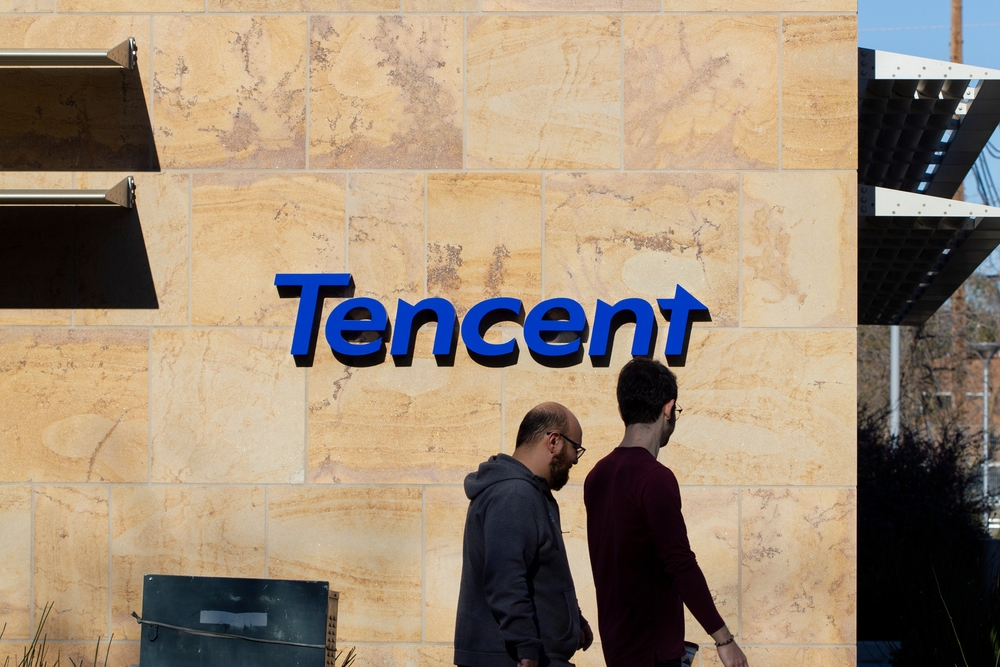
Tencent’s AI restraint highlights risks in Alibaba, JD.com war
China’s top tech firms are under investor pressure to focus on AI instead of costly price wars in food delivery and retail.
Alibaba, JD.com, and Meituan have invested billions this year in subsidies, ads, and hiring to compete for users, leading to a combined US$100 billion loss in market value for JD.com and Meituan since late last year.
Regulators last month summoned the three firms to address aggressive competition, leading them to pledge an end to “disorderly competition.”
Despite these commitments, analysts say the companies are likely to continue heavy spending to attract users, as AI monetization remains years away.
Tencent, which reported higher-than-expected revenue this week and signaled restraint in AI spending, has outperformed its peers this summer.
Meituan is also pushing international growth, having launched its food delivery app Keeta in Saudi Arabia and planning to expand to Qatar, Kuwait, Oman, and Bahrain over the next three years.
.source-ref{font-size:0.85em;color:#666;display:block;margin-top:1em;}a.ask-tia-citation-link:hover{color:#11628d !important;background:#e9f6f5 !important;border-color:#11628d !important;text-decoration:none !important;}@media only screen and (min-width:768px){a.ask-tia-citation-link{font-size:11px !important;}}🔗 Source: Bloomberg
The government meeting with JD, Alibaba, and Meituan about “disorderly competition” represents part of China’s systematic effort to rein in big tech platforms since 2021.
The State Administration for Market Regulation has imposed over 22 billion RMB in fines on digital platforms through the end of 2024, with specific cases targeting Alibaba and Meituan for exclusive dealing practices1.
This regulatory shift has already chilled investment in the sector, with venture capital funding declining 1.14% monthly in affected industries after the 2021 Anti-Monopoly Guidelines were introduced2.
The coordinated statements from all three companies promising to end disorderly competition suggest they understand the serious regulatory risk, having witnessed the government’s willingness to impose substantial penalties on platform giants.
The pattern reflects Beijing’s broader strategy to address market concentration among digital platforms like Baidu, Alibaba, and Tencent, driven by concerns about concentrated corporate power that extend beyond simple market fairness3.
The billions being spent on delivery subsidies make economic sense when viewed against the scale of the global online food delivery market, valued at $288.84 billion in 2024 and projected to reach $505.50 billion by 20304.
This represents a 9.4% annual growth rate in a market where the platform-to-consumer segment already accounts for over 71% of revenue, validating the business model these companies are fighting over4.
The “prisoner’s dilemma” dynamic described by Morgan Stanley reflects how companies cannot afford to cede market share in a rapidly expanding sector, even if short-term spending pressures margins.
However, the challenge remains converting growth into profitability, as operational logistics and the need to maintain competitive pricing continue to pose significant obstacles for companies in the sector5.
The spending war intensifies because food delivery represents a gateway to broader consumer relationships that extend beyond meals into grocery delivery and other services, which are also experiencing rapid expansion4.
……Read full article on Tech in Asia
Business

One-stop lifestyle app dedicated to making life in Singapore a breeze!




 English
 简体中文
简体中文
Comments
Leave a comment in Nestia App