The Tax Bill Nobody Saw Coming: How Elderly Care Centres Got Caught In A 2018 Backdraft
Subscribe to our FREE Newsletter, or Telegram and WhatsApp channels for the latest stories and updates.
Budget 2027 is unlikely to bring any new taxes when it is tabled in Parliament on 9 October.
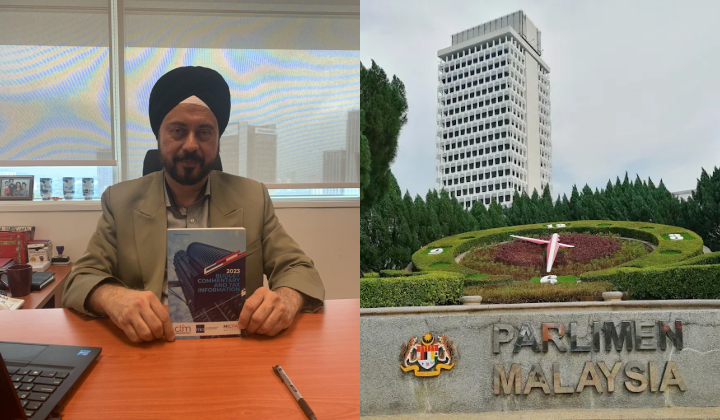
Instead, the government’s focus will most likely be on managing the tension between fiscal discipline and public pressure over the cost of living, according to Harvindar Singh, council member of the Chartered Tax Institute of Malaysia (CTIM) and tax partner at SCS Global Consulting (M) Sdn Bhd.
“It’s probably more about showing [Malaysians] that the savings from ongoing reforms would come back to them in a targeted way,” he told The Rakyat Post.
With little fiscal room left, he expects the government to keep prioritising targeted assistance programmes like Sumbangan Asas Rahmah (SARA) over blanket subsidies, alongside stronger tax compliance and e-invoicing enforcement to boost collections.
“There’s really no room for reduction of taxes,” he said. “But we need to look at improving collections without squeezing [taxpayers], because compliance levels in the country are not all that fantastic.”
Caregiving emerged as one of the clearest pressure points when he spoke to us.
Harvindar, who represents several caregiving associations, said the Service Tax Act was amended in 2025 to explicitly bring elderly care centres under the scope of the 8% service tax.
Following that, he said, the Royal Malaysian Customs Department began retroactively imposing the tax on some centres going back to 2018, catching many operators off guard.
“This comes as a bit of a shock to many of them, because they never realised they were supposed to impose service tax,” he said. “If at all, it should only be imposed from 2025 onwards, once the Act was amended.”
CTIM has written to the Ministry of Finance seeking an exemption, arguing that caregiving centres serve an ageing population rather than operating as commercial ventures. He said the ministry is still gathering feedback on the matter.
Harvindar said middle-income earners remain caught in the middle — earning too much for low-income assistance, while still bearing childcare, elderly care, education and healthcare costs.
He does not expect a broad income tax cut, arguing that targeted relief for unavoidable household costs would help this group more than a blanket reduction that benefits higher earners most.
With the next general election looming, he also does not expect major new personal tax reliefs, but rather a refinement of existing ones tied to childcare, elderly care, healthcare, upskilling and possibly retirement savings.
“I don’t think there’ll be any major giveaway of relief,” he said. “But it will be a refinement of some of these areas.”
READ MORE: Hybrid GST-SST System: Economist Dr Carmelo Ferlito Raises Concerns
READ MORE: This Malaysian Wants To Help Small Businesses Find Customers
Share your thoughts with us via TRP’s Facebook, X, Instagram, or Threads.
……Read full article on The Rakyat Post - News
Other

One-stop lifestyle app dedicated to making life in Singapore a breeze!




 English
 简体中文
简体中文
Comments
Leave a comment in Nestia App