The tragedy of Abdul Rani, the caregiver in Singapore who snapped
Caregivers are often under tremendous stress and they need to be given help before it is too late.
Abdul Rani Md Ariffin was sentenced to eight years’ jail on June 30 for strangling his younger brother to death in their Boon Lay flat in March 2025.
I want to say something I have not shared publicly before, because a court case that concluded last week makes me feel it needs to be said.
My mother lived with breast cancer and depression for many years. I began caring for her when I was 21. Depression is not a visible illness. There is no wound to dress, no medication schedule to anchor the day. What it demands of a family caregiver is something harder to name: a sustained, daily presence with someone who is in the sort of pain that cannot be seen, measured, or fully relieved. There were periods when her darkness began to seep into me – slowly, without my noticing it – until I found myself in a place where the same heavy thoughts kept circling.
In those moments, I’d think: It is so hard for her. How do I end her suffering? That thought terrified me. It came not from cruelty but from the depths of caring – from watching someone I loved in pain and feeling utterly powerless to relieve it. I knew it was wrong. It is wrong. And I was fortunate to have just enough support, just enough community around me, to step back from the edge of that thought.
I share this because the shame around such thoughts keeps caregivers from naming them, seeking help, and getting the intervention they need before it is too late.
Abdul Rani Md Ariffin did not have that safety net.
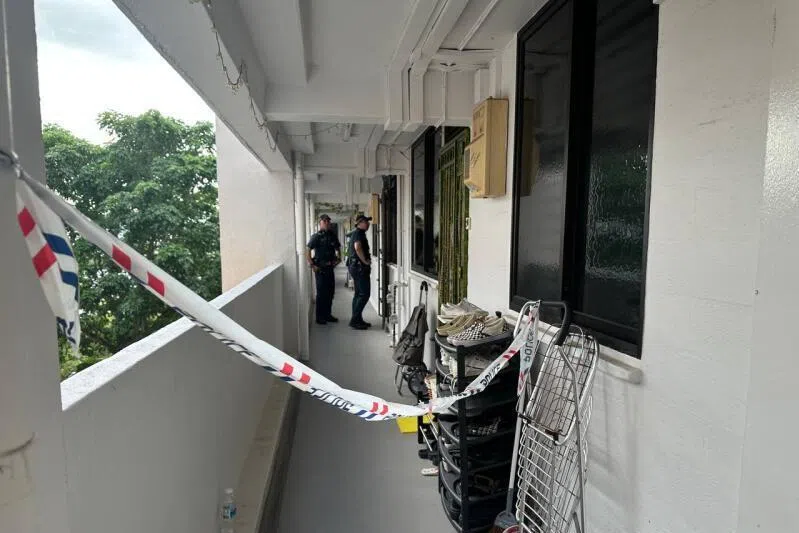
Abdul Rani, 59, was sentenced to eight years in prison on June 30 for strangling his younger brother to death in their Boon Lay flat around 4am on March 11, 2025. He had cared for his three siblings for 14 years after their mother died in 2010 – sleeping on the living room sofa, managing medical appointments and daily necessities for all of them, while living with schizophrenia himself.
The court found he had been suffering from adjustment disorder at the time of the offence, which affected his mood, his anger, and his ability to judge his own actions. The judge described it as a profound family tragedy.
It is. It unfolded slowly, over 14 years, in plain sight, and we should ask ourselves why Abdul Rani was not given more support in all that time.
His defence counsel said in court: “He has great family support. His family is there in the public gallery.” That line stopped me. What does great family support mean? Is it being present in a courtroom after the worst has already happened? Does a caregiver need to reach a breaking point before “great support” is recognised as “not enough”? At what point across those 14 years did anyone ask Abdul Rani how he was doing – not his siblings, but him?
He said in court: “I do not know why I wanted to kill him. I only pity him.” His love and his exhaustion had become indistinguishable from each other. That is not a character failing. That is what can happen to a person who has been left without adequate support for 14 years.
Singapore has invested meaningfully in caregiver support. A slew of grants, networks and programmes have sprung up to lend caregivers a helping hand. The question this case compels us to ask is not whether the architecture is well-built – it is – but whether it reaches people before they reach the edge.
The data suggests it frequently does not. Over 70 per cent do not use available support services, and only 5 per cent enrol in caregiver training (Tan, 2022; 2023). Research from Singapore Management University’s Centre for Research on Successful Ageing (ROSA) found that persistent depressive symptoms were prevalent in 23.4 per cent of caregivers, compared with 9.2 per cent of non-caregivers – a rate more than twice as high.
About one in three caregivers has their own chronic health conditions, ROSA data also showed. Abdul Rani was one of them, carrying his own diagnosis of schizophrenia while caring for others.
There is a structural gap worth naming clearly. Most financial assistance in Singapore’s caregiving architecture – including the Home Caregiving Grant – is gated by the Activities of Daily Living (ADLs) criteria. This means a person in need of care must be unable to perform at least three of six specified functions to qualify, and that is reasonable. But it also means that caregivers supporting people who can still dress themselves or move around their home may be excluded from assistance even if they are under severe strain.
So what happens in the case of people who can perform basic self-care functions but cannot manage finances, prepare meals or navigate transport (these are called Instrumental Activities of Daily Living, or IADLs)? Such people and their caregivers, who may be significantly stretched, largely do not qualify for formal support.
Abdul Rani’s brother had been hospitalised for swollen legs just weeks before the incident. The caregiving situation was clearly intensifying. The window for intervention was open. It was missed.
Abdul Rani’s case points towards three specific gaps worth addressing – not as indictments of what has been built, but as the natural next questions a maturing caregiving system should be asking itself.
First, the gatekeeping criteria for caregiver support alongside ADL thresholds need to be reviewed. We need to look at how much residual capacity a caregiver has left for themselves to look after their own health and well-being. This is not the same as the functional dependency of the person receiving the care, though both matter.
Second, we must invest in reaching out to caregivers who are not accessing support. Those who are just about managing are precisely the people least likely to seek help and most in need of it. Social service agencies and primary care teams must ask caregivers not “How is your loved one doing?” but “How are you?”.
Third, invest in caregiving awareness and literacy among younger people before the task of caregiving falls upon them. They should be made to understand that caregiving is a likely chapter of their lives, and that seeking support is an act of responsibility, not weakness. Conversations had early – in families, workplaces, and schools – reduce the stigma that keeps caregivers silent until it is too late.
None of this requires dismantling what exists. We just need to widen support and recognise that caregivers are not peripheral to Singapore’s care system. They are its foundation. And the foundation needs tending, too.
As more of us age, we will need care – and more of us will provide it. Family units are smaller, and the care that once fell across many siblings now concentrates on whoever is closest. The people absorbing that weight are doing so largely without being seen.
Abdul Rani Md Ariffin was one of them. His brother’s death was a tragedy that should never have happened. And it should give us pause – not to apportion blame, but to ask honestly and urgently: What would we have needed to do differently to reach out to him with support before 4am on March 11, 2025?
The writer is a co-founder and deputy CEO of SG Assist, a social enterprise that supports caregivers, seniors and individuals with disabilities.
……Read full article on The Straits Times - Singapore
Singapore

One-stop lifestyle app dedicated to making life in Singapore a breeze!




 English
 简体中文
简体中文
Comments
Leave a comment in Nestia App