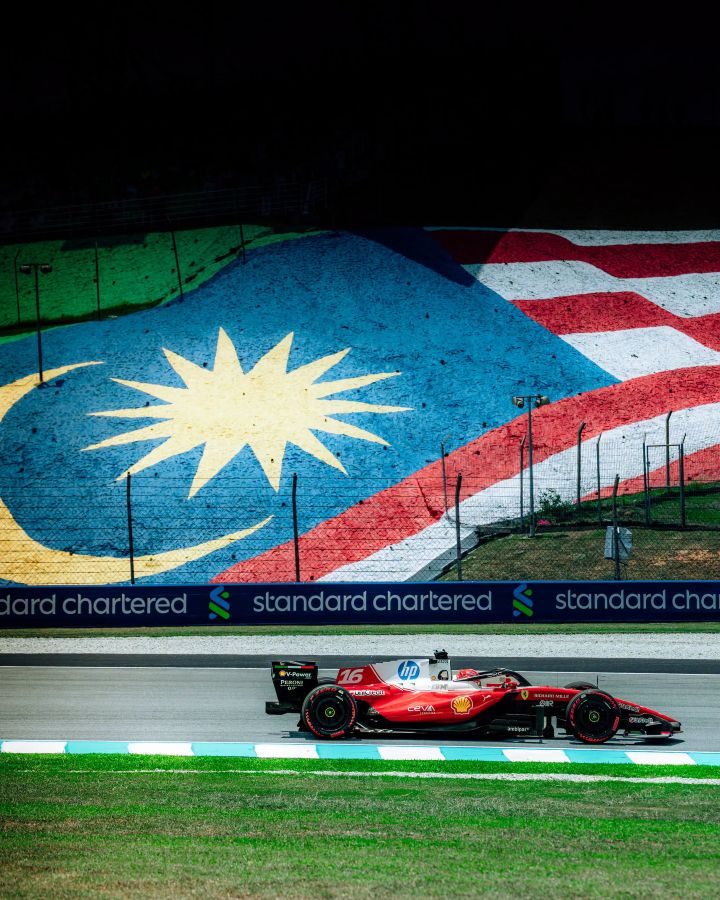
What Are The Chances F1 Will Return To Malaysia For Good? Here’s What We Know
Subscribe to our FREE Newsletter, or Telegram and WhatsApp channels for the latest stories and updates.
Malaysia is exploring a permanent return to the Formula 1 calendar, but the cost of hosting a race and the possibility of sharing a slot with another country could determine whether Sepang gets another shot.
Formula 1 came back to the Sepang International Circuit (SIC) earlier this month, and after nine years of Malaysian fans asking for its return, the big question is whether the sport will stick around this time.
The good news is that bringing back the Malaysian Grand Prix is no longer just wishful thinking. Following F1’s return to Sepang in October 2026, the government did confirm that it is exploring the possibility of hosting the championship regularly again.
However, there is a catch. Malaysia has not committed to bringing back an annual Grand Prix, and the government is still weighing the financial costs against the potential economic benefits.
According to The Edge on 15 October, Youth and Sports Minister Dr Mohammed Taufiq Johari said Malaysia was considering hosting F1 either annually or once every few years, potentially in partnership with another country. A government assessment report is expected to be submitted to the Cabinet by November.
So, could we see the Malaysian Grand Prix return as a permanent fixture, or is a shared arrangement more realistic?
Let’s look at the evidence.
Pic: Facebook / F1
Malaysia’s latest F1 appearance came about under unusual circumstances.
The Bahrain and Saudi Arabian Grands Prix were cancelled earlier in the 2026 season amid the conflict in the Middle East. Formula 1 subsequently announced that Sepang would host the Bahrain Grand Prix from 2 to 4 October, allowing the championship to retain the race on its calendar.
The event was officially named the Formula 1 Gulf Air Bahrain Grand Prix in Malaysia. In other words, Malaysia hosted the race, but it was not officially revived as the Malaysian Grand Prix.
That distinction matters because the arrangement was designed to save an existing race rather than establish a new, permanent Malaysian round.
Still, it gave F1 another opportunity to race at Sepang, which had not hosted a Grand Prix since 2017.
The response was encouraging. The Star reported that the October event attracted approximately 261,000 visitors and generated more than 100,000 ticket sales, compared with around 30,000 tickets sold during Malaysia’s final F1 race in 2017. The government initially estimated the event’s economic impact at RM950 million.
Those numbers provide the government with a stronger case to examine a return. But they do not automatically prove that hosting F1 every year would deliver the same results.
Pic: SBR Trackdays
If Malaysia wants to bring back its own Grand Prix every year, it needs to answer one very important question: who is going to pay for it?
According to Bernama, Sepang International Circuit CEO Azhan Shafriman Hanif estimated in July that securing a permanent F1 slot would cost at least RM300 million annually, including hosting rights and local preparation expenses.
The hosting rights alone were estimated at between US$70 million and US$80 million.
That is a considerable amount of money to commit to a sporting event, especially when the government is also expected to fund public services, infrastructure and local sports development.
The October 2026 race was a particularly favourable arrangement because Bahrain was responsible for the hosting rights fee, while Malaysia’s preparation costs were estimated at between USD$10 million and USD$16 million (roughly RM40.8 to RM65.3 million at the time).
Malaysia therefore cannot simply look at the estimated RM950 million economic impact and assume that the same result would justify spending RM300 million every year.
There are several things to consider.
First, an economic impact estimate is not the same as money collected by the government. Much of the spending may benefit hotels, restaurants, transport operators, retailers and other businesses. The government would need to establish how much of that benefit translates into tax revenue, local employment and other measurable returns.
Second, the 2026 race was a special occasion. F1 had been absent from Sepang for nine years, and the novelty of its return helped attract large crowds. Whether that enthusiasm would continue at the same level every year remains uncertain.
Third, the government must consider the opportunity cost. As the sports minister has stressed, a return to F1 should not come at the expense of funding for athlete development and other sports.
In short, Malaysia needs a convincing business case, not just a successful race weekend.
Pic: F1
This is where the idea of a shared slot becomes interesting.
As mentioned earlier, Mohammed Taufiq confirmed that Malaysia was considering hosting F1 every few years in collaboration with another country, rather than committing to an annual race. The proposal remains at an early stage, with a government assessment expected to reach the Cabinet by the end of November.
A rotating arrangement could potentially allow Malaysia to return without taking on the same recurring commitment as an annual Grand Prix.
For example, Malaysia could explore an arrangement in which Sepang hosts a race in selected seasons, with another country hosting in the intervening years. This is a possible model, not a confirmed proposal with an agreed partner or schedule.
There are precedents for countries sharing the practical burden of hosting a race, although the details vary.
In 2026, Malaysia hosted the Bahrain Grand Prix under Bahrain’s event identity, preserving the race after it could not take place at its original venue. That demonstrated that F1 can accommodate a race outside its usual location when the circumstances and agreements allow it.
READ MORE: The Bahrain Grand Prix Is Coming To Malaysia, It Is Still Called The Bahrain Grand Prix
There are encouraging signs, but Malaysia still has to convince F1 that a return makes commercial sense.
FIA president Mohammed Ben Sulayem said Malaysia would need a business plan covering at least five years, including commercial, promotional and logistical requirements, before a permanent return could be considered.
Sepang has an established international circuit, experience hosting major motorsport events and a location close to Kuala Lumpur International Airport. However, Singapore already hosts an F1 race, meaning Malaysia would need to demonstrate why another Southeast Asian round would be commercially worthwhile.
Former Sepang International Circuit CEO Razlan Razali has also expressed doubts about the viability of a permanent comeback, highlighting the financial challenges and competition for F1 calendar space.
READ MORE: F1 Fans Overseas Want Sepang Back Permanently After Bahrain GP 2026
Pic: F1
Malaysia has shown that Sepang can host F1 again, and the 2026 event demonstrated that local fans still have an appetite for the sport.
However, bringing F1 back for one weekend is very different from securing a place on the calendar for years to come.
The government must demonstrate that the economic benefits justify the costs, address logistical shortcomings and secure an agreement that works for both Malaysia and F1.
For now, a shared or rotational arrangement looks like the more practical route, while an annual Malaysian Grand Prix would require a stronger financial case.
Malaysian fans have reason to be hopeful, but there is not enough evidence yet to say F1 is coming back for good.
READ MORE: F1 Teams Are Promoting Malaysia Better Than Malaysia, According To Malaysians
READ MORE: F1 Teams And Drivers Have Landed In Malaysia, Revving Up Social Media
Share your thoughts with us via TRP’s Facebook, X, Instagram, or Threads.
……Read full article on The Rakyat Post - News
Other

One-stop lifestyle app dedicated to making life in Singapore a breeze!




 English
 简体中文
Comments
Leave a comment in Nestia App