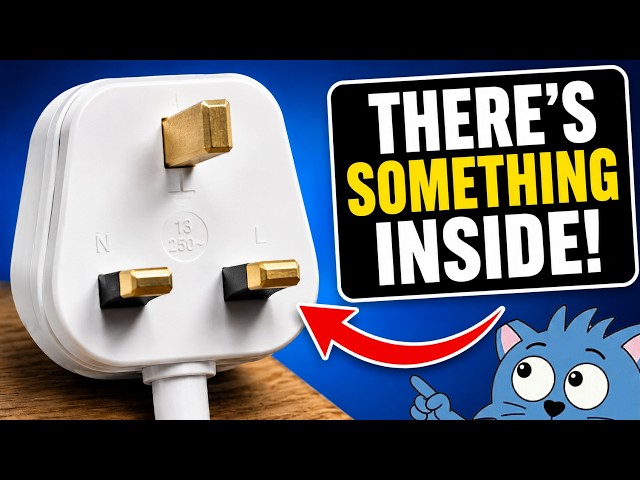
Why Singapore Uses This Big Power Plug But Other Countries Don’t
The Blue Cats’ website: https://www.thebluecats.com.sg/The Blue Cats' Instagram: https://www.instagram.com/singaporethebluecats/ --------Singapore uses the Type G plug, which has three rectangular pins, operates at 230 volts and 50 hertz, and is known for strong safety features. It has a fuse inside, shutters over the live and neutral holes, and partially insulated pins to reduce the risk of accidental electric shock.The main reason Singapore uses the Type G plug is history. The plug was introduced in Britain in 1947 after World War II, when copper was in short supply. British engineers used a ring circuit system to save copper, but this required each plug to have its own fuse. Because Singapore was formerly under British rule, the system was adopted here and remained even after independence.Many former British-linked places, including the UK, Ireland, Malaysia, Brunei and Hong Kong, still use Type G plugs. However, not all former British colonies use it. India and Pakistan, for example, use Type D because their electrical systems were developed under an older British standard before Type G became common. Once buildings, appliances and regulations are built around one plug system, changing everything becomes expensive and troublesome.Attempts to create a universal plug have mostly failed. The IEC introduced a proposed global standard in 1986, but it was not widely adopted. The EU also studied plug harmonisation in 2017 and found it costly, wasteful and unnecessary. Instead, charging is becoming more standardised through USB-C, especially after the EU required many electronic devices to use USB-C from December 2024, with laptops following from April 2026.
Other

One-stop lifestyle app dedicated to making life in Singapore a breeze!





 English
 简体中文
简体中文
Francis Chuangli 11/05/2026
This is the British electricity plugs designed to identify that it will connect to a 220-240 powered outlet and in it it also have space to accommodate a safety current controller fuse.
Reply
Noted on this update and good morning and has a nice day and good breakfast and thank for your information and comments and share and totally agree with this comment safety
Reply