Advertising enquiries: https://advertise.thebluecats.com.sg
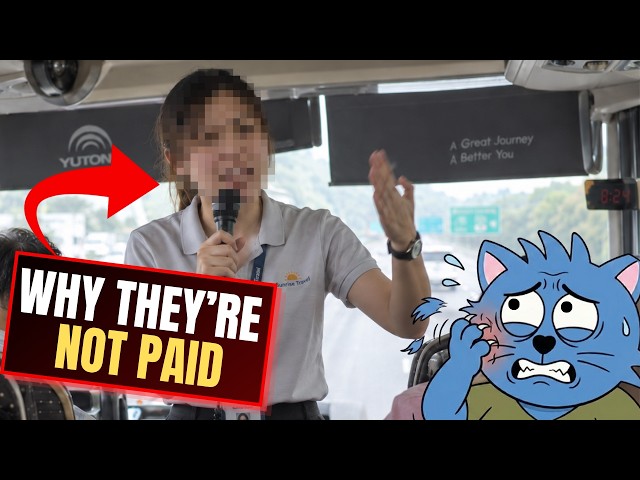
What is a zero-dollar tour? A zero-dollar tour does not literally cost nothing. The term refers to a package sold at an extremely low price, sometimes below what it costs to provide the tour, and the model is particularly associated with China's tourism industry, though it exists in other Asian markets too. The money is recovered after arrival. A five-day tour costing $800 per person to operate might be sold for $300, with the selling agency handing tourists to a local ground operator without paying enough to cover the trip. In the more extreme negative-fare version, the operator pays the agency for the tourists, effectively buying a busload of customers. Tour guides are often freelancers who may pay to take on a group, earning instead through commissions on what tourists buy.
This shapes the whole experience. Meals are included but served at empty eateries outside normal hours, with salespeople approaching diners throughout. Attractions are mixed with venues framed as culturally significant that lead into rooms selling expensive silverware or herbs, sometimes using false claims such as silver combs curing disease or warnings of impending health problems. A cheap tour or the presence of shopping stops is not automatically illegal. The problem arises when tourists are misled, when undisclosed shopping or paid activities are added, when kickbacks form part of prohibited arrangements, or when tourists are forced to spend.
Researchers have studied the model. A 2011 paper in the Journal of China Tourism Research identified three characteristics of zero-fare tours: very low selling prices, poorer experiences at the destination, and an unusual financial relationship between the selling and receiving companies. A study of day tours in Macau found that operators depending heavily on commissions designed itineraries around extracting money at the expense of the tourist experience. Another study found that guides in China described feeling like scapegoats within the system, though some valued the opportunities it created.
Travellers can avoid the trap by treating unusually cheap packages as a warning sign and steering elderly relatives towards reputable agencies. Those encountering forced shopping in China are advised to preserve contracts, itineraries, payment records, chats and recordings and report the incident, with police contact advised for threats, restrictions on freedom or abandonment. China's Tourism Law prohibits agencies from using unreasonably low prices to lure tourists and then obtaining improper benefits, and since 2025 the Ministry of Culture and Tourism has worked with police and market regulators on a nationwide crackdown, with 2026 enforcement focused on travel agencies, shopping outlets, tour guides and online travel platforms. In Singapore, a 2001 Forbes article named the country alongside Thailand and Malaysia as affected by zero-dollar tours, though there is no good evidence this is currently a widespread problem here.





 English
 简体中文
Comments
Leave a comment in Nestia App